
NORTH AMERICA

Alaskan Bear Wins Online Spirit Week Competition
Source: Smithsonian Magazine
You’ve probably heard of Shark Week, but did you know that Fat Bear Week also exists?
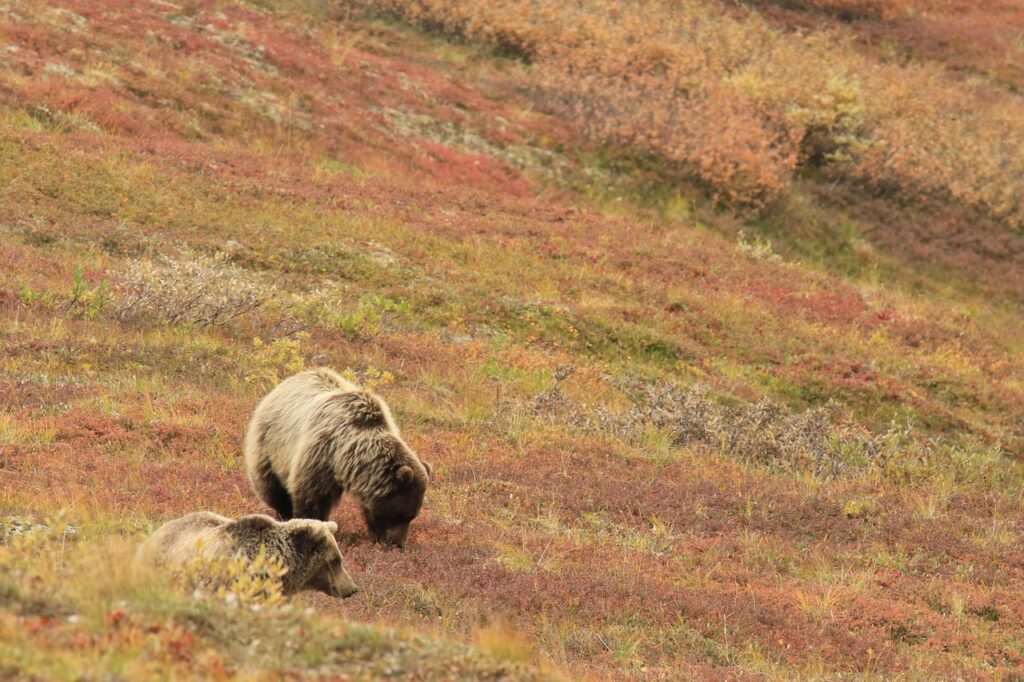
In Alaska’s Katmai National Park and Preserve, a social media sensation encourages audiences to vote for their favorite salmon-loving brown bear. This October, Grazer, the first adult female bear, cinched her victory as the audiences’ favorite after rushing to her cubs when attacked by a rival bear on the shores of the Brooks River. Violence and victory are common for the animals, as the start of the Week was postposed when one male bear attacked and killed a female bear. Though not always rosy, the excitement of the Week raises awareness of and donations for brown bear conservation, and lets the audience have some fun along the way.
[su_button url=”https://www.smithsonianmag.com/smart-news/highly-defensive-mother-bear-grazer-defeats-male-that-killed-her-cub-to-win-fat-bear-week-180985241/” target=”blank” style=”flat” background=”#638d3d” radius=”0″]Read the full article[/su_button]

Electric Passion for Eagle Conservation
Source: The Colorado Sun
The most expected thing to find in an eagle’s nest is hatchlings, not the angry end of a lightning bolt.
In an unassuming tree in Stearns Lake, Colorado, a bald eagle perched overlooking its empty nest when the structure suddenly went up in flames. A bolt of lightning destroyed the eagle’s collection of twigs and findings but luckily the bird flew from the scene unscathed after the initial shock of the impact. Because the eagle and its mate missed this year’s opportunity to rear young, county authorities will be closing a local nature preserve for several months to reduce disturbances and help ensure the eagles can resume their nesting next year.
[su_button url=”https://coloradosun.com/2024/10/09/eagle-nest-lightning-strike-boulder-county/?utm_source=newsletter&utm_source=The+Colorado+Sun+Newsletters&utm_campaign=Who%20gets%20to%20live%20in%20Steamboat%20Springs?_20241010&utm_medium=email” target=”blank” style=”flat” background=”#638d3d” radius=”0″]Read the full article[/su_button]

Elk Overstaying Their Welcome
Source: Western Landowners Alliance
In western parts of Montana, elk numbers are on the rise and private landowners are tasked with dealing with the consequences.
Whether the landowners view the substantial elk population as an asset or detriment, supporting elk herds on properties is a pricey endeavor that owners might not want to pay for. Coupled with a lack of incentivized hunting programs and federal elk redistribution initiatives to help curb these large herds, landowners face difficulties when managing overpopulation. Solutions specific to each situation and collaborations among landowners are recommended to help address this issue.
[su_button url=”https://onland.westernlandowners.org/2024/policy-arena/divisive-elk-require-a-united-response/?utm_source=rss&utm_medium=rss&utm_campaign=divisive-elk-require-a-united-response&utm_source=Western+Landowners+Alliance+Emails&utm_campaign=967f44873b-RSS_EMAIL_CAMPAIGN&utm_medium=email&utm_term=0_fbd6660bb4-a8a8655b87-%5BLIST_EMAIL_ID%5D&goal=0_fbd6660bb4-967f44873b-577516248″ target=”blank” style=”flat” background=”#638d3d” radius=”0″]Read the full article[/su_button]

Roadways For All, Even Wildlife
Source: Los Angeles Times
While roads can connect drivers to their destinations, they can also provide habitat disruptions to animals who live around the freeways.
A new law in California urges communities to consider and honor the natural patterns of local wildlife movements before planning their next construction project. Highways, streets, and even buildings can sever boundaries of animal habitats and force wildlife into direct traffic, posing potential harm to the animal and the human behind the wheel. Thankfully, all California inhabitants—four legged or two—now are legally required to be considered so that neither are put in harm’s way.
[su_button url=”https://www.latimes.com/environment/story/2024-10-03/california-law-boosts-wildlife-protections-and-connectivity” target=”blank” style=”flat” background=”#638d3d” radius=”0″]Read the full article[/su_button]

Conservationists, Add This to Your Bookshelf
Source: The Wildlife Society
Ever wish there was a handbook telling you exactly how to do something? Well, cross wildlife conservation off that list because this year, there is one!
The American Wildlife Conservation Partners (AWCP) is a coalition of the top conservation and sporting organizations across the United States. Recently, they published the second volume of their comprehensive conservation recommendations, titled Wildlife for the 21st Century. Thanks to this publication, policy makers can clearly understand the realities and nuances of conservation to more effectively work toward being active stewards of wildlife, wild lands, and public access for conservationists and recreationists alike.
[su_button url=”https://wildlife.org/awcp-releases-new-conservation-recommendations/” target=”blank” style=”flat” background=”#638d3d” radius=”0″]Read the full article[/su_button]

Wild Cats Cause Colorado Controversy
Source: Summit Daily
New proposition in Colorado might divide wildlife professionals more than it would bring them together.
On October 9, the board of the Colorado Wildlife Employees Protective Association wrote a resolution stating that it was against a new proposition that would ban hunting of wild cats. Proponents of the proposition say that hunting would not be an effective tool to manage species populations and those against it maintain that management tools need to stay under the jurisdiction of the Colorado Division of Parks and Wildlife. Though these views differ, both sides say that their stances support the widely acknowledged North American Model of Wildlife Conservation.
[su_button url=”https://www.summitdaily.com/news/colorado-parks-wildlife-election-proposition-127/” target=”blank” style=”flat” background=”#638d3d” radius=”0″]Read the full article[/su_button]

Species Tension Running Freely
Source: Phys.org
Galloping wild horses on North America’s plains can be a powerful image but what happens when their hooves start to trample another species’ potential to thrive?
In Wyoming, new research suggests that the wild horse population directly impacts its traditional neighbor, the sage grouse. In 2023, researchers estimated that wild horses were nearly 56,000 over the land’s carrying capacity, as determined by the Bureau of Land Management. These horse populations can destroy native grasses, spread seeds of invasive plants, and invade nesting grounds, all of which negatively impact the grouse’s survival. Conservationists are searching for a solution that would protect both species.
[su_button url=”https://phys.org/news/2024-10-wild-horse-overabundance-sage-grouse.html?utm_source=nwletter&utm_medium=email&utm_campaign=daily-nwletter#google_vignette” target=”blank” style=”flat” background=”#638d3d” radius=”0″]Read the full article[/su_button]

Trash Pandas Patrol New Territory
Source: The Guardian
Though pesky, a raccoon spotted here or there can be cute or even give you a laugh as you drive by. But over one hundred of them? That’s a different story.
In Poulsbo, Washington, a woman’s home was besieged by hordes of raccoons who left her nearly unable to leave her house. After calling local authorities for help, it was determined that the furry swarm was caused by the woman’s tendency to feed the raccoons occasionally. The perceived kindness to the critters became problematic when the woman had to take her dog to the vet after getting into a scuffle with the nocturnal nuisances. Moral of the story: don’t feed the masked marauders!
[su_button url=”https://www.theguardian.com/us-news/2024/oct/09/washington-woman-raccoons” target=”blank” style=”flat” background=”#638d3d” radius=”0″]Read the full article[/su_button]
AFRICA

Wild Cats Slip Through the Cracks
Source: Mongabay
In West Africa, the W-Arly-Pendjari Complex is a collection of protected forests and arid terrain that is home to hallmarks of African wildlife like lions and elephants. As conservation attention is focused on icons like these, smaller species like servals, caracals, and African wildcats are finding themselves at risk. Coupled with the lack of knowledge about them from conservationists working in these areas, local tensions, livestock grazing, and general human encroachments, these small wild cats are in desperate need of proper assessment to ensure their conservation.
[su_button url=”https://news.mongabay.com/2024/10/west-africas-forgotten-felines-endangered-by-conflict-and-research-gaps/” target=”blank” style=”flat” background=”#638d3d” radius=”0″]Read the full article[/su_button]

Letting the Trunk Lead the Way
Source: The Conversation
Would anyone have guessed that the defining feature of the African elephant would be key to manipulating its behavior? Turns out Australian scientists did.
To mitigate the amount of unfettered destructive elephant behavior on parks and properties, scientists at the University of Sydney have learned that they can use smell to deter the walking giants. Building physical fences is expensive and tactics like culling are widely controversial, so the concept of a “scent fence”—a structure made with an extract that mimics the guarri shrub, a plant elephants steer clear of—allows conservationists to safely influence the animal’s movements and support protected areas.
[su_button url=”https://theconversation.com/how-do-you-stop-elephant-herds-from-trashing-crops-and-trees-target-sensitive-nostrils-with-a-scent-fence-239593″ target=”blank” style=”flat” background=”#638d3d” radius=”0″]Read the full article[/su_button]

Wildlife Poaching in the Face of Hunger
Source: Aljazeera
The Great Nile Migration of antelopes is a natural biannual wonder that is revered by conservationists in Sudan. But when dire hunger forces people to poach these animals, the excitement goes dull.
Plagued by conflict, poverty, and famine, Sudanese people turn to bush meat to survive and feed their families. Living off less than $1.90 a day and facing high inflation, citizens enter into the wild to bring food home to their communities. The Sudanese government and conservationists alike are receiving backlash, as citizens claim they worry more for federally protected wildlife than the wellbeing of their people. A solution is urgently needed to protect Sudan’s citizens and their wildlife.
[su_button url=”https://www.aljazeera.com/features/2024/10/3/in-south-sudan-hunger-complicates-plans-to-end-wildlife-poaching” target=”blank” style=”flat” background=”#638d3d” radius=”0″]Read the full article[/su_button]

Charcoal-Fueled Chaos
Source: The Conversation
An indigenous forest reduced to piles of ash isn’t the only jarring truth about the current state of this Kenyan wildland.
The Nyekweri, a forest rich with wildlife and complex ecological importance, is situated next to the Maasai Mara National Reserve but is not receiving the same care as its neighbor. As portions are sold off to private investors who use the ancient trees for charcoal production, animals and plants are rapidly losing their habitat. Conservationists, local activists, and policymakers are now faced with reforestation to save this indigenous landmark and the creatures who call it home.
[su_button url=”https://theconversation.com/maasai-maras-indigenous-forest-is-disappearing-with-drastic-consequences-238478″ target=”blank” style=”flat” background=”#638d3d” radius=”0″]Read the full article[/su_button]
EUROPE

Legendary Bird Soars into Existence
Source: NDTV World
Once a proud ancient symbol and revered by European civilizations, the northern bald ibis had become critically endangered due to pesticide usage, poaching, and habitat destruction. Today, the population sits at over 500 strong.
Conservationists in Germany took the challenge of rehabilitation head on and instituted programming to conserve, raise, and release these ancient birds. Thanks to creative solutions like marked aircraft that teach the birds where and when to migrate, the ibises are able to fly on their own two wings again.
[su_button url=”https://www.ndtv.com/world-news/northern-bald-ibis-returns-to-europe-after-300-years-of-near-extinction-6689648″ target=”blank” style=”flat” background=”#638d3d” radius=”0″]Read the full article[/su_button]

Sly, and Lovable, as an Urban Fox
Source: The Conversation
Though some may consider foxes a nuisance, a new study shows that citizens of the United Kingdom generally don’t mind these clever four-legged urbanites.
Foxes play a key role in ecosystems and are a species that makes it easy for people to feel connected to the natural world if they come upon them, much like squirrels or birds. Though because of their out-foxing reputation and increased frequency of contact due to human development, wildlife professionals are concerned these animals could cause increased conflicts with humans. Surprisingly, the results of a study from the University of Hull suggest that people find these crafty critters to be endearing more than anything. Save them a cup of tea next time you find yourself in the Isles!
[su_button url=”https://theconversation.com/even-as-urban-foxes-get-bolder-people-appreciate-rather-than-persecute-them-say-psychologists-234110″ target=”blank” style=”flat” background=”#638d3d” radius=”0″]Read the full article[/su_button]

Old DNA Gets New Life in Highland Cattle
Source: The Guardian
To fill the ecological gap left by the long extinct Auroch in Britain, conservationists and genetic researchers have successfully bred an animal that shares some of the auroch’s DNA to be rewilded in its stead.
The Dundreggan estate near Loch Ness, Scotland is the new home of the tauros, a species bred with a full sequencing of Auroch DNA found in ancient genetic relatives by the European rewilding charity Trees for Life. Hoping to have the tauros adapt to the environment in the same way as its extinct predecessor, the project will hopefully increase biodiversity, education, and ecotourism of the area.
[su_button url=”https://www.theguardian.com/environment/2024/oct/10/herd-of-tauros-to-be-released-into-highlands-to-recreate-aurochs-effect” target=”blank” style=”flat” background=”#638d3d” radius=”0″]Read the full article[/su_button]
WORLD

Sparing Livelihoods and Snow Leopards
Source: Mongabay
Large wildlife is majestic from afar but when it decimates your livestock, the majesty turns into tyranny.
Nepal’s snow leopard is an iconic cat of the country, and a new conservation plan seeks to reallocate funds to hopefully readdress how local communities engage with the animal. By focusing more on conflict resolution between landowners and snow leopards, this new plan has conservationists hoping to see a decrease in retaliatory leopard killings by humans whose livestock and livelihoods are at stake. They also hope the plan will curb the illegal trade of these prized leopard pelts.
[su_button url=”https://news.mongabay.com/2024/10/nepals-snow-leopard-conservation-shifts-focus-from-research-to-conflict-mitigation/” target=”blank” style=”flat” background=”#638d3d” radius=”0″]Read the full article[/su_button]

Desert Detection: A Powerful Pair
Source: The Conversation
One of the best ways to get to know local wildlife is to focus where it’s been—its tracks. In the shifting desert sands, this can get quite tricky. But with a unique team up, researchers are finding their way.
Working in conjunction with Indigenous experts, conservationists in Australia are learning new ways of studying desert-dwelling animals. Engaging in research with their Indigenous counterparts allows for the transfer of generational tactics of reading tracks in the sand, stories of animal behaviors, and ways in which everyone can better understand the land and its inhabitants. With traditional skills and modern excitement for conservation, you can’t lose.
[su_button url=”https://theconversation.com/reading-desert-sands-indigenous-wildlife-tracking-skills-underpin-vast-monitoring-project-238978″ target=”blank” style=”flat” background=”#638d3d” radius=”0″]Read the full article[/su_button]