
NORTH AMERICA

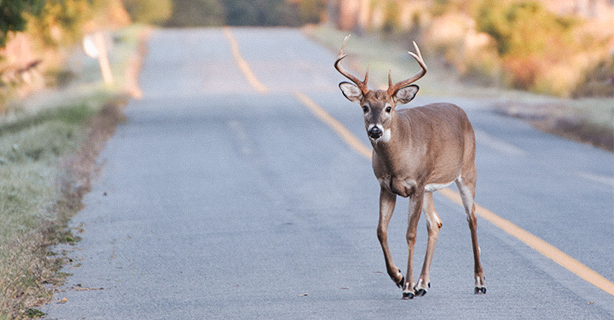
Hectic Holidays for Drivers
Source: Forbes
The holiday season is upon us and so are the North American deer! As you make your holiday travels, be sure to stay on the lookout for deer rushing across the road. From October to December, there is a noticeable increase in deer movements in North America. State Farm, the largest insurer of vehicles in the United States, offers that drivers should slow down if they spot a deer on the side of the road and to avoid driving at dusk or at night when possible. Keep yourselves and those darting deer safe!
[su_button url=”https://www.forbes.com/sites/garystoller/2024/11/21/deer-strikes-occur-now-more-than-other-times/” target=”blank” style=”flat” background=”#638d3d” radius=”0″]Read the full article[/su_button]

Little Cats Become Welfare Giants
Source: Mongabay
Once facing critically dwindling numbers, the North American bobcat’s renewed numbers offer an even larger ecological benefit. Bobcats prey on smaller animals that are frequent transmitters of disease, and as a result, help to stop potential illnessness from coming into contact with humans. As they are larger animals, they are able to more easily combat diseases and prevent them from passing onto humans. With decreasing habitat due to urbanization and other land-use changes, the bobcat needs continued conservation to ensure safety for all in the ecosystem.
[su_button url=”https://news.mongabay.com/2024/11/bobcats-are-back-and-theyre-helping-protect-people-from-zoonotic-disease/” target=”blank” style=”flat” background=”#638d3d” radius=”0″]Read the full article[/su_button]

Arctic Mammals Graze on the Green
Source: UCDavis
New research from UC Davis suggests that Greenland’s caribou and muskoxen have an impact on the abundance and timing of wild plants in the greening Arctic. Studies have shown that plant phenology—the innate biological timing of live organisms such as plants—affects when animals arrive, but new research may prove the opposite; that animal patterns and abundance affect plant growth and timing. In an age when the artic is warming and caribou populations are decreasing, these relationships are increasingly important to observe and understand.
[su_button url=”https://www.ucdavis.edu/climate/news/greening-arctic-caribou-and-muskoxen-play-key-role” target=”blank” style=”flat” background=”#638d3d” radius=”0″]Read the full article[/su_button]

Big Sheep, Small Population
Source: LAist
After a winter of heavy snows in the Sierra Nevada, California’s iconic bighorn sheep population suffered a substantial decline. Avalances, dwindling food sources, and forced movement into mountain lion territory all meant bad news for the sheep. Coupled with an already existing placement on the endangered species list by the state and federal government since 1999, conservationists were concerned for the herd’s numbers. Thankfully, results from new research show that the sheep population has triumphantly grown to nearly same size as it was before the fateful snows.
[su_button url=”https://laist.com/brief/news/climate-environment/sierra-nevada-bighorn-sheep-endangered-species-recovery” target=”blank” style=”flat” background=”#638d3d” radius=”0″]Read the full article[/su_button]

Bird Collisions in the Big Apple
Source: The Guardian
Skyscrapers are marvels of human architecture, but to flying birds in New York City, they’re more damaging than delightful.
Research from the NYC Bird Alliance suggests that there have been increased numbers of bird colliding with the reflective windows of the city’s tallest buildings. As the city naturally sits in the middle of a bird migratory corridor, researchers and volunteers alike have seen a nearly 20% increase in injured or killed birds as a result of flying into the glass. Thankfully, specialists suggest remedies such as deterring lights to help decrease collisions.
[su_button url=”https://www.theguardian.com/us-news/2024/nov/10/birds-building-collisions-new-york-city” target=”blank” style=”flat” background=”#638d3d” radius=”0″]Read the full article[/su_button]

Diminuitive Deer Dodging Disaster
Source: Phys.org
The Florida Keys is known for its gorgeous shores and vacation homes, but it’s also the home of smallest subspecies of the white-tailed deer, the Key deer. Weighing about 65lbs on average, these little deer are at risk of losing their unique habitat to lasting effects from destructive hurricanes and rising sea levels. As a result, car collisions, starvation, and increased contact with humans are on the rise for this tiny deer. Researchers continue to search for a solution for these unique ungulates.
[su_button url=”https://phys.org/news/2024-11-florida-iconic-key-deer-uncertain.html?utm_source=nwletter&utm_medium=email&utm_campaign=daily-nwletter” target=”blank” style=”flat” background=”#638d3d” radius=”0″]Read the full article[/su_button]

Coyotes Defy Population Threats
Source: The Wildlife Society
New research suggests that coyotes are more adaptive, and even more comically unpredictable, than previously thought. A team of wildlife researchers wanting to determine the relationship between coyotes and their environment took to Snapshot USA, a large national database of trail camera images, to analyze how they responded to habitat, humans and varying food sources. They found that the canines thrive in urban environments and can have larger populations in areas where hunted. Researchers will keep analyzing these relationships to learn more about the coyote’s unique behaviors.
[su_button url=”https://wildlife.org/coyote-hunting-doesnt-always-decrease-populations/?utm_medium=email&_hsenc=p2ANqtz–9VbwTH3N1HurE3UP0isEEb5-6m7HlOeumclJFdVPEVhKxTw-opA1GKIdn5Ioc77-XGHcR_rGdBSiQHpxUNIbmeLvoVA&_hsmi=333974654&utm_content=333974654&utm_source=hs_email” target=”blank” style=”flat” background=”#638d3d” radius=”0″]Read the full article[/su_button]

Conservation Award Funds Fundamentals
Source: Theodore Roosevelt Conservation Partnership
Thanks to an allocation of over $275 million for habitat creation and enhancement to the Theodore Roosevelt Conservation Partnership from the USDA’s Natural Resources Conservation Service, hunters and anglers alike should soon be seeing substantial improvements to their cherished cultural pastimes. Funds from this award will go toward projects that work with the nation’s leaders in wildlife and ecosystem conservation to protect and preserve the natural world and humans’ enjoyment of it.
[su_button url=”https://www.trcp.org/2024/11/07/trcp-partners-receive-over-275-million-for-habitat-creation-and-enhancement/” target=”blank” style=”flat” background=”#638d3d” radius=”0″]Read the full article[/su_button]

New U.S. Protections on African Giraffe
Source: U.S. Fish & Wildlife Service
The largest ruminant animal on earth, the giraffe, may now be under more regulations due to a proposed addition to the U.S. Endangered Species Act—and there are implications for the States. The U.S. Fish and Wildlife Service is proposing to list three subspecies of the northern giraffe from various parts of Africa and two species from east Africa as endangered. This status would result in additional regulations with the stated intent to reduce illegal trade by requiring U.S. citizens to purchase permits before importing and provide some financial assistance to programs researching giraffe population declines.
[su_button url=”https://www.fws.gov/press-release/2024-11/us-fish-and-wildlife-service-proposes-endangered-species-act-protections” target=”blank” style=”flat” background=”#638d3d” radius=”0″]Read the full article[/su_button]
AFRICA

Point, Click, and Conserve!
Source: The Wildlife Society
The Urban Caracal Project, founded in 2014, has seen extreme success in the past ten years using social media to support wildlife conservation. Researchers have been testing how social media and other forms of online social communication can increase awarness in conservation, track specific movements of animals, and spread knowledge. Members of this project have found that specifically in Cape Town, South Africa, where the caracal is native, the species has nearly doubled after the project was launched and that the public’s interest in the wild cat they share their environment with has skyrocketed, too.
[su_button url=”https://wildlife.org/social-media-can-boost-caracal-conservation/” target=”blank” style=”flat” background=”#638d3d” radius=”0″]Read the full article[/su_button]

New Practices, Old Knowledge
Source: The Patrol
Patrol.org speaks with John Forrest, a field ranger in South Africa, about a style of wildlife conservation he helped champion when he was an active conservationist in the field—learning through doing. Adaptive management is a flexible approach that allows conservationists to change their strategies as they go, learning and growing to make the best scientific choices for their conservation scenario. Coupled with engaging communities and learning the local knowledge surrounding the animals, adaptive conservation gives all parties more agency in South Africa’s complex ecosystems.
[su_button url=”https://www.patrolling.org/adaptive-conservation-management/” target=”blank” style=”flat” background=”#638d3d” radius=”0″]Read the full article[/su_button]

Elevating Elephant Concerns
Source: Phys.org
A new study found, using 53 years of data, that there has been substantial declines in numbers from many forest and savanna African elephant populations. However, declines are not everywhere and populations in southern Africa, especially Botswana, are thriving. The study collected data from a staggering 475 sites and 37 countries, making it a well-rounded take on the state of these elephants. Conservationists say that there isn’t a “cure-all” to the entire issue of population loss, but identifying what tactics work in specific areas may help with finding new and innovative solutions to recovering populations in areas with declining numbers.
[su_button url=”https://phys.org/news/2024-11-years-survey-african-elephant-decline.html” target=”blank” style=”flat” background=”#638d3d” radius=”0″]Read the full article[/su_button]
EUROPE

Wildlife Penned in by New Wall
Source: Euro News
Due to increased nationalism and political tensions in northern Europe, a wall has been built that now splits Poland’s ancient Białowieża Forest down the middle. As a result, the razor-sharp barrier bars mammals large and small from safely crossing over into what once was territory they could roam in. Predators in the area are starting to use the fence as a tool to corner and more easily kill prey, and gene pools are beig restricted due to the constrained freedom. Researchers and politicians alike are looking for a solution that would champion both diplomacy and wildlife.
[su_button url=”https://www.euronews.com/green/2024/11/10/steel-walls-and-barbed-wire-fences-how-the-rise-of-tough-eu-borders-is-hurting-wildlife” target=”blank” style=”flat” background=”#638d3d” radius=”0″]Read the full article[/su_button]
WORLD

Summit Summation: Success on the Horizon
Source: Nature.com
This November, the most recent meeting of the COP16 biodiverstiy summit was held in Cali, Colombia. Though there was much to debate, the parties in the summit did agree on several subjects that would help the world to conserve some of its most challenging threats today, such as the rapid rate that species are threatened by extinction worldwide. With ideas including digitally sequencing DNA of threatened species and asking for more financial contributions from businesses that benefit from wildlife, conservation may have some big wins soon!
[su_button url=”https://www.nature.com/articles/d41586-024-03609-6″ target=”blank” style=”flat” background=”#638d3d” radius=”0″]Read the full article[/su_button]

Ancient Tracking Meets Modern Interest
Source: The Smithsonian
Taking inspiration from an accredidation process from the African continent, North American researchers are looking to the past to learn how to better connect with nature. Author and tracking enthusiast Ben Goldfarb writes on how he started to learn the language of the land to see where its creatures go, and how gaining information from Indigenous communities can reveal truths about the connection among humans, animal stewardship, and the land we all share.
[su_button url=”https://www.smithsonianmag.com/science-nature/even-ai-technology-races-ahead-old-school-prehistoric-science-wildlife-tracking-making-comeback-180985229/?utm_source=smithsoniandaily&utm_medium=email&utm_campaign=editorial&spMailingID=50348180&spUserID=MTE1MTk2NTA3MjIyOQS2&spJobID=2802868092&spReportId=MjgwMjg2ODA5MgS2″ target=”blank” style=”flat” background=”#638d3d” radius=”0″]Read the full article[/su_button]