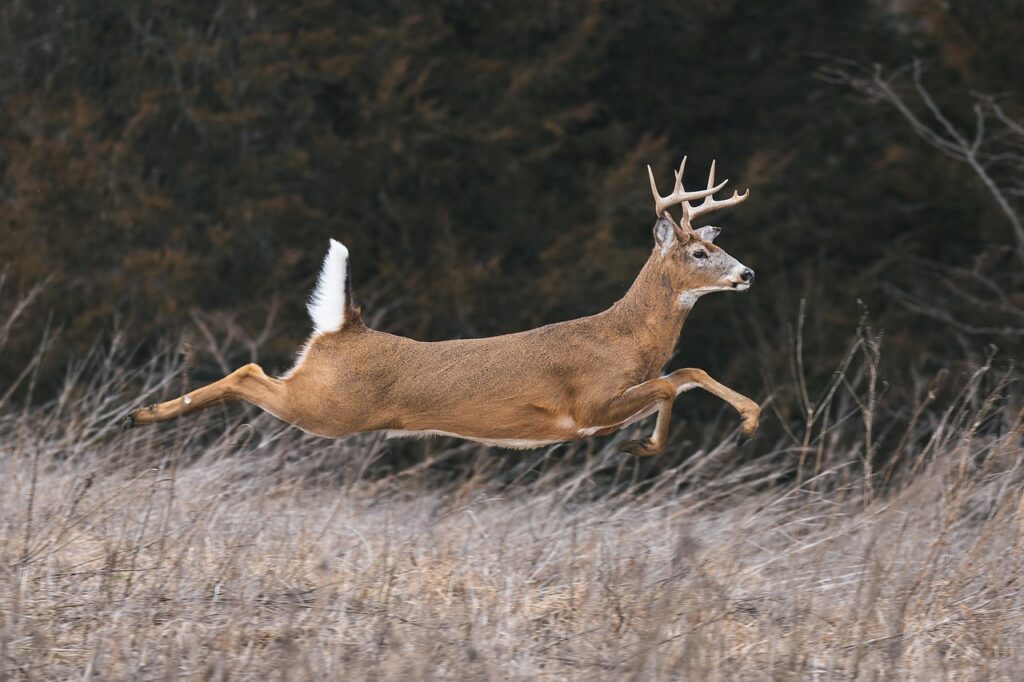

Alongside its iconic Great Lakes, picturesque shores and historic forests, Michigan is also home to the white-tailed deer. A hallmark of the state with majestic antlers and namesake white tail, the deer aren’t always passive natural neighbors. Because their population has grown so large, Michiganders in some parts of the state are now dealing with some serious side effects of the unchecked deer herd.
The North American Model of Wildlife Conservation is a great roadmap that guides experts towards revitalization of wild species. Though it has many successes, like the feat of white-tailed deer, increased species abundance can also come with challenges to society alongside the benefits of bringing animals back from the brink.
To look at this phenomenon more closely, we can take Michigan as a case study. Along with the accomplishment of having substantial deer in their forests again, here are some side effects that trail closely behind in the state.
Vehicle Damage
If you ever travel in Michigan, you’ll definitely experience the joy of watching out for white-tailed deer on the road. With your head on a constant swivel and hands steadily at the wheel, you’ll be well prepared for those antlered runners darting across the road seemingly whenever they please, causing nearly 521 thousand collisions and 13 thousand human injuries or deaths from since 2014.
Crop Damage
Wild animals like white-tailed deer are free to roam as they please, meaning that they are able to creep onto farmlands and feed on crops. If large numbers do this enough, the deer can cause substantial damage to crops, resulting in serious financial trouble for farmers. It’s estimated that in a single year, deer-related crop damage caused $276 million in losses to farmers in the northeastern United States alone.
Disease Transmission
Animals sharing food sources and remaining in close proximity pose a threat to wildlife health. As spaces and food sources are shared, the likelihood of disease spreading using these shared resources can increase and threaten a herd’s health. Similarly, deer that have contracted diseases may spread viruses to farm animals they interact with.
Decreased Plant Diversity
With overpopulation of wildlife comes competition for natural resources. White-tailed deer frequently consume grasses and other plants as reliable food sources but when their numbers grow large and unchecked, natural plant diversity is often threatened due to relentless grazing of specific plants.
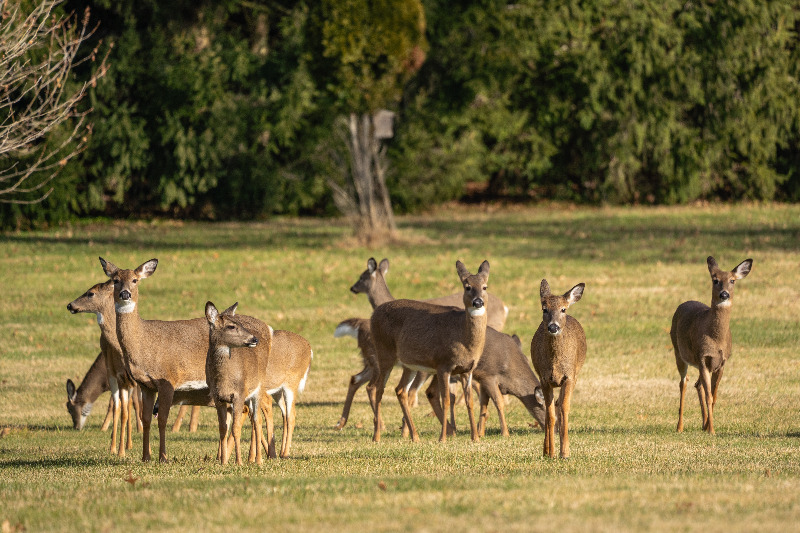
With the overabundance of deer Michigan is facing, these issues loom large. There are short-term solutions in place, but they aren’t sustainable or able to address the problems of a large deer population. Farmers and landowners use repellents but they’re short lived and seem to pass the problem of a hungry deer herd onto their neighbors. Special exclusionary fencing to keep deer away from crops is incredibly expensive and impractical to use over very large areas. Additionally, the number of licensed hunters in Michigan is also declining–as much as 22% since 2000–which results in fewer deer hunted and more deer on the landscape.
Michigan researchers and managers are concerned with this problem and how it affects their communities and the beautiful ecosystem the state is known for. To find an answer, they actually turned toward another issue to see a holistic solution.
Alongside deer, hunger is unfortunately too common in Michigan. The state ranks 13th nationally in food insecurity experienced by its citizens, with about 14% of residents reporting periods of food insecurity in 2022. To help, governmental and private donations have been consistent but just not enough to sustain communities in need. According to scientists, the 1.4 million food-insecure people in Michigan could benefit from donated venison obtained from the overabundant deer, but due to constraints like limited funding, long distances between venison processing facilities, disease and metal-testing labs and donation centers, and decreasing number of hunters, Michigan’s current venison donation program is not near to achieving its’ full potential in alleviating hunger in Michigan.

Scientists are researching how bolstered venison donation programs might help with food insecurity in the state while also aiding both Michigan farmers and motorists by addressing white-tailed deer overabundance. Alongside conservationists, they are exploring new funding models, changes in hunting licensing and new management approaches to ethically, sustainably and scientifically turn deer overabundance into an asset.
Another outcome from this proposed programming would be greater awareness of the potential role of hunting in wildlife management. Done for subsistence, solitude or tradition, hunting has been a popular American pastime and cultural institution for millennia. Other benefits like psychological health from time spent in nature and connection to family members are also integral to the experience of the outdoors. However, often these get lost in contemporary society.
With a critical eye determining how to strengthen the framework that already exists in the state, there may be a solution at hand that everyone–even the iconic antlered icon of Michigan–can benefit from.