
NORTH AMERICA

Invasive Species on the Menu
Source: NBC 10 Philadelphia
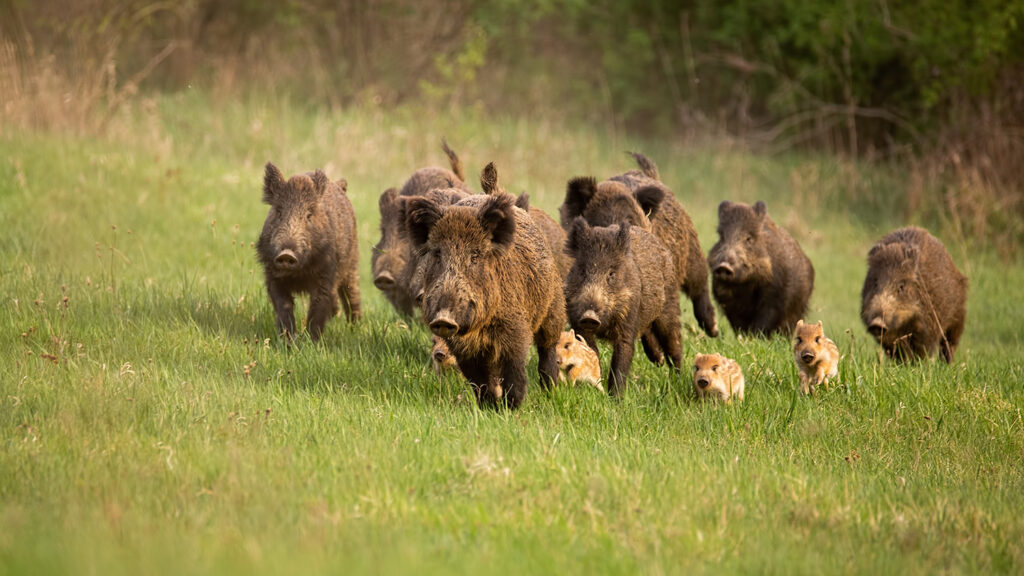
To raise awareness for National Invasive Species Week (February 24-28, 2025), the U.S. Fish & Wildlife Service states how we can help take the invasive invaders out of the environment—by eating them! From California to the Midwest to the Atlantic Coast, the Service reported that there are edible, and tasty, invasive species to be found. Green iguanas, invasive carp species, northern snakeheads, nutria and feral hogs are all on the menu and may be found rooting up a natural habitat near you. Though hunting can be an effective way to manage these unwanted species, be sure to check your state’s regulations before heading into the wild.
[su_button url=”https://www.nbcphiladelphia.com/critter-corner/invasive-species-hunt-eat-nutria-iguana-boar/4128007/” target=”blank” style=”flat” background=”#638d3d” radius=”0″]Read the full article[/su_button]

Walking on the Wild Side may Help with PTSD
Source: The Wildlife Society
It’s been colloquially known that spending time in nature is “good for the soul,” but recent research from the University of Massachusetts scientifically demonstrates these benefits. Researchers immersed 19 war veterans in peaceful experiences with nature, such as outdoor walks, visiting wildlife centers and bird watching. The participants reported increased psychological wellbeing and a decrease of PTSD symptoms such as anxiety. The scientists say that this wild immersion was instrumental in easing adverse symptoms of PTSD and instilled an understanding and appreciation of wildlife conservation.
[su_button url=”https://wildlife.org/wildlife-experiences-can-ease-ptsd-symptoms/” target=”blank” style=”flat” background=”#638d3d” radius=”0″]Read the full article[/su_button]

Canadian Caribou Movements Revealed Through Satellite Tracking
Source: The Wildlife Society
More than spectacles to watch in wonder, large caribou herd movements may be the key to identifying and conserving variation within this iconic mammal. In the past, researchers have used genetic differences to inform how caribou were managed, but they have now taken a different approach–using tracking. By monitoring satellite GPS collars, researchers were able to identify six unique groups of caribou by their behavioral and movement patterns. These results will help researchers identify where these groups live and help conservationists employ the best tactics to more effectively manage each caribou herd.
[su_button url=”https://wildlife.org/caribou-movement-patterns-reveal-distinct-populations/” target=”blank” style=”flat” background=”#638d3d” radius=”0″]Read the full article[/su_button]

No Crime for These Partners, Just Mealtime
Source: The Wildlife Society
Sometimes an unlikely pair is the most potent, as seems to be the case with coyotes and badgers. New research from the University of Nebraska-Lincoln has found cases of coyotes and badgers hunting together, an effective team that can scout for prey above and below ground at the same time. Though the team is rare to see, reports of this unique relationship occur in indigenous stories across North America and the pair is the subject of historical field reports. As the coyote and badger pairing comes to light, researchers are exploring how these two carnivores may benefit each other when it comes to surviving in the wild.
[su_button url=”https://wildlife.org/wild-cam-watch-coyotes-hunt-with-badgers/” target=”blank” style=”flat” background=”#638d3d” radius=”0″]Read the full article[/su_button]

Yellowstone Bison Become One After 120 Years of Conservation
Source: Phys.org
Down to just 23 animals, American bison in Yellowstone National Park are now thousands strong, and new research may be the key to sustaining that strength. A study published by Texas A&M College of Veterinary Medicine and Biomedical Sciences has identified that the Yellowstone bison are now a single breeding population, a change from their historic identity as two genetically different herds coexisting in the park. Because of changes in these breeding patterns and to continue their genetic health, scientists are now suggesting that the Yellowstone bison be managed as one cohesive herd.
[su_button url=”https://phys.org/news/2025-03-years-efforts-yellowstone-bison-population.html” target=”blank” style=”flat” background=”#638d3d” radius=”0″]Read the full article[/su_button]

Cougar Cubs Crawl into Michigan
Source: Click on Detroit
Cougar cubs have been confirmed in Michigan’s Upper Peninsula for the first time in over 100 years. In Ontonagon County, two cougar cubs were reported to be roaming the area, according to the Michigan Department of Natural Resources. Researchers say that the cubs’ appearance is the first known cougar reproduction in the western Great Lakes states in years, bringing hope for the species that is listed as endangered in Michigan. Though state biologists say that cougar cubs are dependent on their mothers for the first two years of their lives, the cubs were found alone. What this means for the cubs’ survival remains to be seen, but researchers are keeping a watchful eye for these cats in the wild.
[su_button url=”https://www.clickondetroit.com/news/local/2025/03/16/where-cougar-cubs-were-spotted-in-michigan-for-the-first-time-in-over-100-years/” target=”blank” style=”flat” background=”#638d3d” radius=”0″]Read the full article[/su_button]

More Room Needed for Desert Bighorns
Source: LA Times
The 1950s almost saw the end of the desert bighorn sheep as it struggled to survive rapid habitat loss. Luckily, conservationists began to rewild and protect the western spaces that these sheep call home. Now 20,000 strong, the desert bighorn is a success story of sound conservation. To aid their continued growth, the sheep need to move into new areas, but human urbanization and infrastructure make this a challenge. Continued conservation efforts to ensure these sheep have ample space to maintain and increase their populations will benefit the ecosystems we all call home.
[su_button url=”https://www.latimes.com/opinion/story/2025-03-16/texas-bighorn-sheep-rewilding-west” target=”blank” style=”flat” background=”#638d3d” radius=”0″]Read the full article[/su_button]

East Coast Island Calls for More Deer Management
Source: Martha’s Vineyard Times
Deer populations five to six times greater than considered healthy have resulted in residents of Martha’s Vineyard to request that Sundays become legal additions to the island’s deer hunting regulations. This may be a needed change, as Massachusetts Fish and Wildlife estimate that a healthy herd is between 12 to 18 deer per square mile, a staggeringly lower number than the island’s current 100 per square mile of private property. With such a high population, the added hunting day may be the key to preserving the island’s habitat from deer destruction.
[su_button url=”https://www.mvtimes.com/2025/03/17/survey-islanders-open-sunday-hunting-private-land/” target=”blank” style=”flat” background=”#638d3d” radius=”0″]Read the full article[/su_button]

Lend an Ear: Grizzly Bear Podcast Covers New Changes
Source: Western Landowners Alliance
With new changes potentially coming to grizzly bear’s listing under the U.S. Endangered Species Act, what could this mean for the bears and people working in areas where they are known to roam? The Working Wild University is an award-winning podcast that looks at conservation topics in the American West. In this episode, they explore the famous grizzly bear, its vast history as a formidable force in the wild and the past instances of listing and delisting the animal under the U.S. Endangered Species Act.
[su_button url=”https://onland.westernlandowners.org/2025/the-working-wild/wwu-grizzly-comment/” target=”blank” style=”flat” background=”#638d3d” radius=”0″]Read the full article[/su_button]

CWD Comes for Elk in Wyoming
Source: WyoFile
The neurological disease known as chronic wasting disease (CWD) has found its way into Wyoming’s elk herds which could put the animals at great risk. CWD has reportedly been found in the fourth elk feedground in northwest Wyoming, a state-run area that feeds an average of 1,500 elk each winter. As this is the first time the disease has entered elk lands managed by the state, Wyoming’s game wardens and biologists are keeping a watchful eye on the herd and working together to implement ways to hopefully stave off the disease before it spreads even further into other elk populations.
[su_button url=”https://wyofile.com/chronic-wasting-disease-infects-4th-elk-feedground-this-one-in-jackson-hole/” target=”blank” style=”flat” background=”#638d3d” radius=”0″]Read the full article[/su_button]

Rebounding Bobcats Provide New Opportunities
Source: 13 WTHR
Bobcats have increased their distribution and abundance in Indiana and are considered a recovered species in the Hoosier State. To provide new opportunities, a recent vote from the Indiana Natural Resources Commission now allows people to trap and snare bobcats in 40 counties in southern Indiana. With a highly-regulated hunting season to ensure sustainable harvests, the state has a collective quota of 250 bobcats per season they are allowed to take, with individual hunters only allowed to legally take one bobcat each year. Though an effective and sustainable management tool, there is opposition to the new season, with some stating that bobcats in Indiana were a protected species since 2005 and should be conserved using different efforts.
[su_button url=”https://www.wthr.com/article/news/local/indiana-bobcat-bobcats-trapping-snaring-trap-kill-hunt-natural-resources-law-required-fur-selling-season-quota-limit-predator-endangers-protected/531-3cc4ea76-dbd4-4bed-81b8-84f9d6c77a09″ target=”blank” style=”flat” background=”#638d3d” radius=”0″]Read the full article[/su_button]

Michigan Thinks of New Way to Manage Deer Herd
Source: Hillsdale Daily News
In Michigan, the hyperabundance of white-tailed deer has led to more harmful deer-vehicle collisions, increasing crop damage for farmers and ecological problems for other species in the environment. To help solve this, a plan introduced in the state’s legislature intends to offer free antlerless tags to those who purchase deer hunting licenses to decrease the state’s growing deer population. The Michigan Department of Natural Resources and State Representative Jennifer Wortz hope that the proposed plan incentivizes hunters to head into the great outdoors to better manage deer herds in the Mitten State.
[su_button url=”https://www.hillsdale.net/story/news/local/2025/03/19/right-now-antlerless-deer-licenses-cost-about-20/82477884007/” target=”blank” style=”flat” background=”#638d3d” radius=”0″]Read the full article[/su_button]
AFRICA

The Truth on Poaching in South Africa
Source: Lowvelder
In a recent tell-all article published in South Africa, poachers near Kruger National Park pull back the curtain on the realities of the illegal bushmeat trade and why it’s taken such a hold in their communities. Sources say that for traditional healing, economic benefit or for food, the advantages of poaching are too strong or necessary to ignore for members of local communities where poverty drives the illegal trade. When buying meat legally from the butcher shop is too expensive and as machine-made snares become more available, poaching seems to be the only answer to those striving for ways to survive.
[su_button url=”https://www.citizen.co.za/lowvelder/news-headlines/local-news/2025/02/28/the-big-cats-are-poached-for-their-hides-organs-and-bones-while-the-other-animals-are-hunted-for-their-meat/” target=”blank” style=”flat” background=”#638d3d” radius=”0″]Read the full article[/su_button]

Conservation Technology Helps Anti-Poaching Mission
Source: Patrol
“There’s an app for that!” says conservationists using new tech from Digital Reserve Management. To counteract mounting challenges of wildlife conservation in African countries, new affordable software from the tech company is making solutions accessible. This technology doesn’t require wifi to transmit data, a huge win for field research in remote areas, and has added functionalities that allow data to be transferred to devices quickly and with enhanced safety protocols. These technologies may be the next big step for conservation in Africa’s changing environments and an equally valuable tool in the continuing fight to end poaching.
[su_button url=”https://www.patrolling.org/affordable-appropriate-technology-to-combat-poaching/” target=”blank” style=”flat” background=”#638d3d” radius=”0″]Read the full article[/su_button]
EUROPE

European Lynx Selected for Rewilding
Source: BBC
With its new mission, a recently born European lynx kitten in a zoo in Cornwall is more than a fun exhibit for a field trip. The kitten has been selected as a candidate for Europe’s Linking Lynx rewilding conservation program which aims to reintroduce lynx into the mountainous region of the Carpathians to the Alps. If the lynx kitten passes the necessary tests and screenings, it will be safely transferred to a rewilding facility in Germany where it will learn how to function in the wild before its release. Collaborations such as the zoo and the Linking Lynx program reinforce the key role local efforts play to further the mission of wildlife conservation everywhere.
[su_button url=”https://www.bbc.com/news/articles/cge1r231j3do” target=”blank” style=”flat” background=”#638d3d” radius=”0″]Read the full article[/su_button]

Growing Red Deer Populations Damage UK Ecosystem
Source: BBC
Parts of Suffolk and Norfolk’s iconically marshy landscapes are experiencing high levels of damage from a growing red deer population. Since 2005, East Anglia has had a growing deer population whose numbers are now damaging farmers’ crops and the local environment, including other native species who graze the same foods and even native bird populations. A report from the Forestry Commission and the Norfolk Farming and Wildlife Advisory group indicates that there are about 4,500 red deer in the area and that the best way to quell further ecological and economic damage is to implement culls of this increasing deer population.
[su_button url=”https://www.bbc.com/news/articles/c0rzjwq7yv2o” target=”blank” style=”flat” background=”#638d3d” radius=”0″]Read the full article[/su_button]
WORLD
Buffer Zones may Cause More Harm Than Good
Source: Phys.org
We all know humans can influence each other, but can we influence animals too?
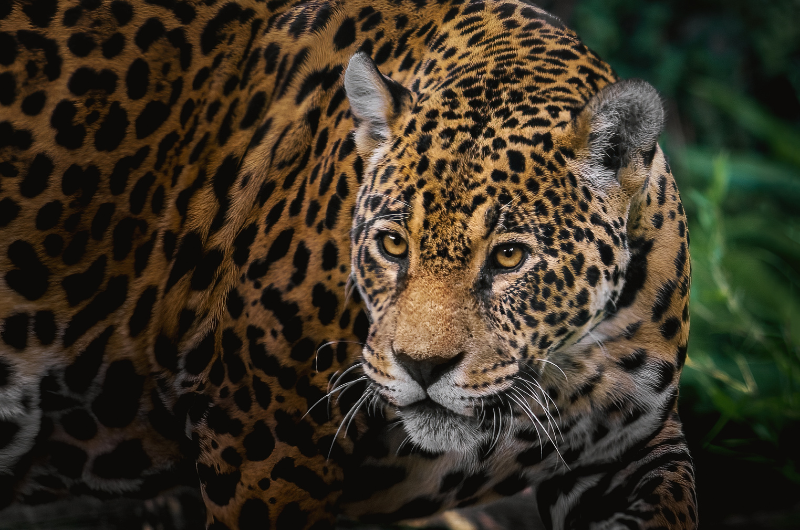
A study from the Yale School of Environment highlights the impacts human activity can have on carnivore behaviors in the wild. Mexico’s montane cloud forests are surrounded by “buffer zones” that are meant to protect roaming predators and humans living in these areas from each other, but researchers found that these locations are hot spots for human-wildlife conflicts and are even causing carnivores to shift their nocturnal behaviors, causing more daytime conflicts with humans. The study’s findings underscore the importance of managing protected areas in the face of increasing human pressures with adaptive and specific conservation efforts that incorporate local communities.
[su_button url=”https://phys.org/news/2025-03-human-carnivore-behavior-mexico-cloud.html” target=”blank” style=”flat” background=”#638d3d” radius=”0″]Read the full article[/su_button]

Elephants Trampled by Unplanned Human Infrastructure
Source: Mongabay
Though hundreds of Asian elephants call Bangladesh home, the population of this wild animal is critically endangered. These elephants cross international borders and move between neighboring countries, but their routes, corridors and entrances in and out of Bangladesh have been significantly altered due to human development. Gates, railways and settlements have been constructed in areas the elephants have used for travel for generations, and the conflicts between them and humans are on the rise as a result. To fix this issue, researchers and IUCN Bangladesh are working to implement approaches that will decrease conflicts, conserve the elephants and protect human livelihoods.
[su_button url=”https://news.mongabay.com/2025/03/asian-elephants-fall-victim-to-poor-development-policies-in-bangladesh/” target=”blank” style=”flat” background=”#638d3d” radius=”0″]Read the full article[/su_button]