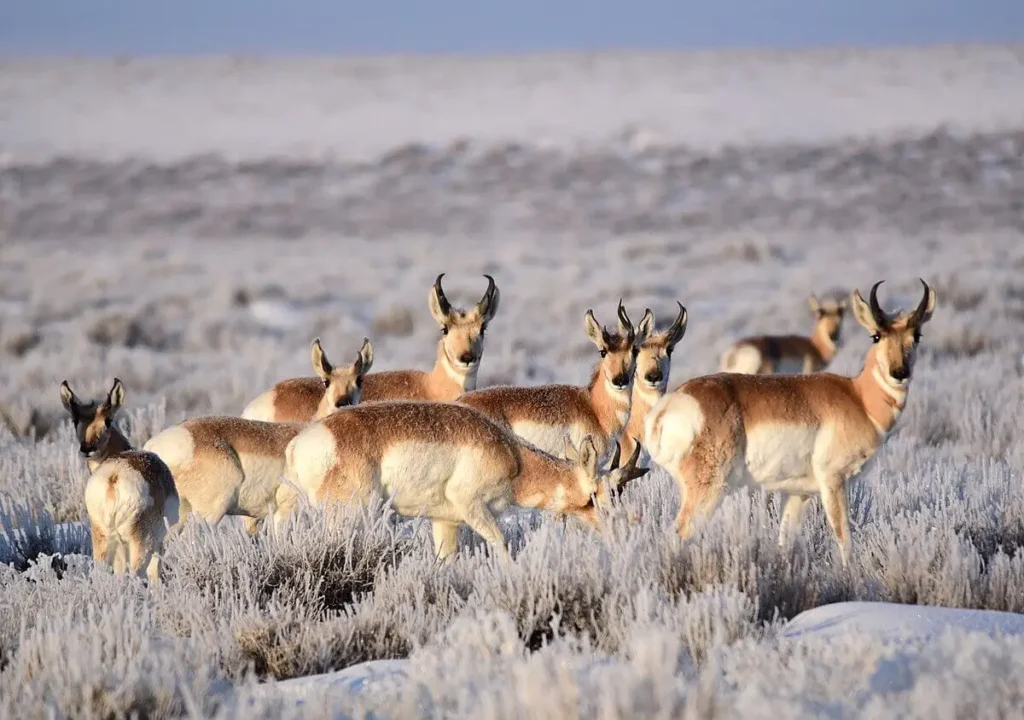

Wyoming’s pronghorn antelope, renowned as North America’s fastest land mammals, undertake a remarkable 200-mile migration each spring and fall between Grand Teton National Park and the Green River Valley. This journey, the longest terrestrial migration in the contiguous United States, is fraught with challenges. Pronghorns must navigate rough terrains, scale elevations, and cross water bodies, all while contending with human-made obstacles such as highways, subdivisions, and private ranchlands. These bottlenecks significantly hinder their migration, threatening their survival and the ecological balance of the region.
Pronghorn Antelope Conservation Efforts: Protecting Critical Habitat
Recognizing the urgency of preserving the pronghorn antelope migration route, The Conservation Fund, in collaboration with various partners, has taken decisive action. A pivotal initiative involved securing a 3,409-acre conservation easement on the Carney Ranch, a significant bottleneck in the pronghorns’ path. This easement ensures that the land remains undeveloped, preserving a critical segment of the migration corridor. The project was made possible through funding from the Acres for America program, a partnership between Walmart and the National Fish and Wildlife Foundation, along with contributions from the Jonah Interagency Office, Wyoming Landscape Conservation Initiative, Wyoming Wildlife & Natural Resources Trust, and The Nature Conservancy, supported by a grant from the Doris Duke Charitable Foundation. The Carney family also made a substantial donation to the project, underscoring their commitment to conservation.
Pronghorn Antelope Ecological Significance of the Protected Land
The conserved land is situated within the southern part of the Greater Yellowstone ecosystem, an area of immense ecological importance. It serves as a vital link between the Bridger-Teton National Forest and other protected areas, facilitating wildlife movement and genetic exchange. The property boasts diverse habitats, including 25 glacial-pothole wetland ponds and over two miles of Green River frontage. These features provide seasonal habitats for various species, including elk, moose, mule deer, greater sage grouse, and trumpeter swans.
Pronghorn Antelope Legacy and Future Outlook
John Carney, President of the Carney Ranch Company, reflects on the family’s long-standing commitment to the land: “Our family has watched the pressures of civilization impact this valley since 1963. The persistent effort of The Conservation Fund has helped our large extended family to realize my parents’ dream to preserve this beautiful place. We are grateful to be able to leave this ranch as part of our legacy for the future.”
This conservation success story highlights the importance of collaborative efforts in preserving critical wildlife corridors. By protecting the pronghorn antelope’s migration path, we not only ensure the survival of this iconic species but also maintain the ecological integrity of one of America’s most cherished landscapes.
Relevant Reading | What Are Three Ways To Improve Wildlife Conservation?