
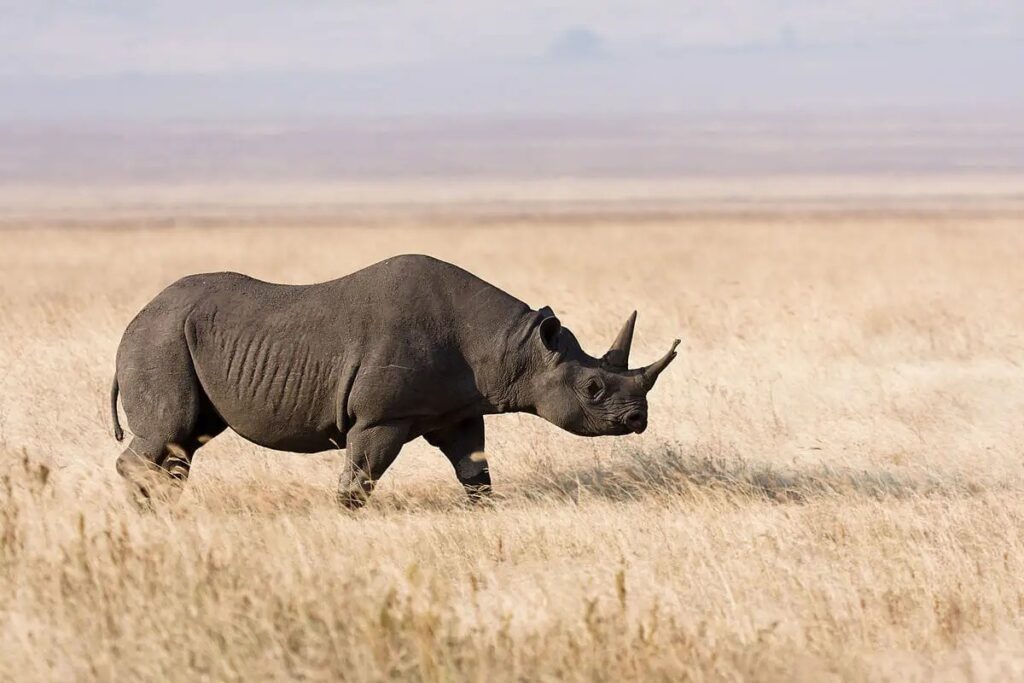

A powerful scene unfolded in Kenya’s fight to protect its wildlife: a black rhino charged into its new home in the Zagara Conservancy, symbolizing the start of a critical relocation effort. Spearheaded by the Kenya Wildlife Service (KWS), this initiative aims to move 21 black rhinos from overcrowded sanctuaries to a newly established, secure habitat – a step designed to support the survival of one of the world’s most critically endangered mammals.
Once widespread across sub-Saharan Africa, black rhino populations were decimated in the 20th century due to relentless poaching driven by the demand for rhino horn. Today, despite decades of conservation work, the species remains on the brink. Kenya currently hosts just over 1,000 black rhinos – a notable recovery from the mere 315 recorded in 1989, but still dangerously below sustainable levels. These numbers, while encouraging, can give a false sense of security. The threat of poaching still looms large, and each rhino lost is a significant blow to the species’ recovery.
Understanding the Demand: Why Are Rhinos Still Poached?
The primary reason rhinos are poached is for their horns, which are highly valued on the black market. Despite being composed of keratin – the same material found in human fingernails – rhino horn continues to fuel a dangerous and persistent illegal trade. Here’s why:
- Traditional Medicine (especially in Vietnam and China): Rhino horn is falsely believed to have medicinal properties, such as curing fever, cancer, and even hangovers. There is no scientific evidence to support these claims, but the myth endures.
- Status Symbol: In some cultures, particularly among wealthy elites in Asia, owning or gifting rhino horn products is seen as a symbol of wealth, power, and social prestige.
- Speculative Investment: In some markets, rhino horn is treated like a commodity. It is stockpiled by individuals hoping its value will rise as rhinos become scarcer.
Bottom line: It’s not about science – it’s about money, myth, and prestige. That’s what keeps the illegal trade alive and continues to put these animals at risk.
Relevant Reading | Do Hunting-Trophy Import Bans Have the Intended Effect?
According to Kenya’s Cabinet Secretary for Tourism and Wildlife, Rebecca Miano, the relocation is more than just a conservation measure – it’s a race against time. The rhinos are being moved from Ol Pejeta, Lewa, and Nakuru sanctuaries, which have surpassed their carrying capacity. Overcrowding leads to increased territorial conflict among rhinos, which accounts for more than 30% of black rhino deaths in Kenya. But it’s not just internal disputes that pose a risk – poaching remains an ever-present danger, particularly when animals are concentrated in limited areas where security resources are stretched thin.
The new sanctuary, Zagara Conservancy, is Kenya’s 18th designated black rhino refuge. Before any animals were moved, the site underwent a rigorous ecological and security assessment to ensure it could offer not only the right habitat – abundant food, water, and space – but also the protection needed to deter poachers. Enhanced security infrastructure and round-the-clock ranger patrols are now in place to safeguard this population.
The relocation itself was a delicate operation. Each rhino was carefully sedated and transported under the watch of experienced veterinarians and rangers to ensure the process was safe and humane. Every step was taken to minimize stress and prevent injury, reflecting the extraordinary care invested in these animals’ survival.
Kenya has set an ambitious goal: to double its black rhino population to 2,000 individuals by 2037. Achieving this will require more than just protecting rhinos from poachers — it will mean providing them with the space and conditions to breed and thrive. Strategic relocations like this one are essential tools in that process.
As the first rhinos settle into Zagara Conservancy, this moment stands as both a celebration and a stark reminder: while progress has been made, the black rhino’s future is far from secure. The species remains classified as critically endangered, and the threat from illegal wildlife trafficking is ongoing. Conservationists must remain vigilant and committed if these animals are to survive the coming decades.
This relocation isn’t just about saving 21 rhinos – it’s about safeguarding an entire species. And in doing so, Kenya is sending a clear message: the fight against extinction is far from over, but with strategic action and unwavering resolve, hope endures.