
When we think about reducing our carbon footprint, food often slides under the radar – yet it accounts for a staggering 37% of global greenhouse gas emissions, according to the IPCC. While vegetarian and vegan diets are gaining ground, many of today’s supermarket ‘sustainable’ products carry a hidden environmental toll – think plastic, processing, and packaging. One often-overlooked solution? Wild venison – a local, low-impact meat with the potential to dramatically cut food-related emissions.
A major culprit? Farmed red meat. A University of Oxford – BBC study found that animal products produce 58% of food-related emissions, with beef and lamb leading the pack. One typical portion of beef consumed four times a week can generate nearly 1.6 tonnes of CO₂ annually – equal to driving across the UK seven times.
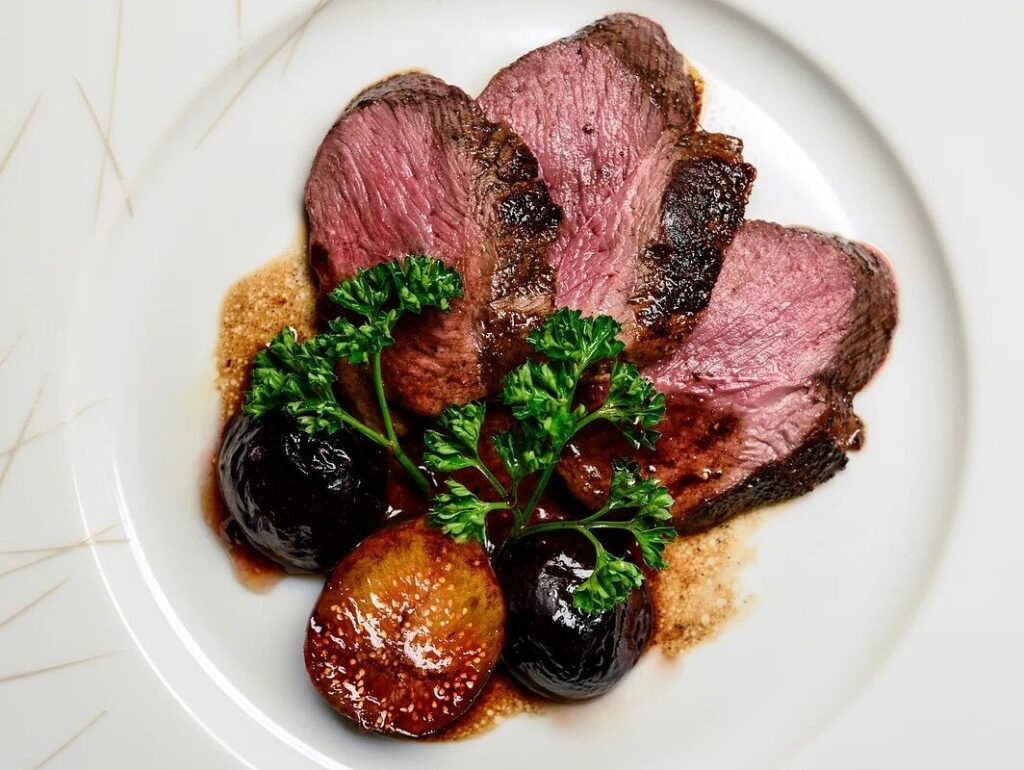
This is where wild venison enters the frame. Venison harvested from controlled deer culls has an impressively small carbon footprint – around just 22 kg CO₂e per kilogram of meat, compared to 103 kg for farmed beef – making it about 78% lower in emissions. That’s not just lower, it’s drastically better. Even including the deer’s methane emissions, the environmental equation swings dramatically in its favor.
Relevant Reading | Subsistence Use: The What, Where and Why
The benefits don’t stop there. Deer populations in places like Britain have surged to levels unseen in a millennium, damaging young forests, impeding biodiversity, and releasing soil carbon by preventing tree regeneration. Responsible culling helps reverse these impacts, helping woodlands thrive and sequester more carbon. As trees absorb around 24 kg of CO₂ per year each, keeping deer in check actually creates carbon credits – some estimates even suggest a net gain of nearly 900 kg of CO₂ per deer annually .
Academic sources bolster this story too. The International Council for Game and Wildlife Conservation notes that hunted wild game can have emissions as low as 0.5 to 4.85 kg CO₂e/kg- far below industrial meat sources – and highlights the added ecological benefit of biodiversity protection. Imperial College London has even begun replacing beef with wild venison as part of its sustainability efforts, recognizing that venison emits just around 27% of the CO₂ compared to beef.
Beyond carbon savings, venison is a lean, nutrient-rich protein that supports healthier diets. It’s lower in fat, higher in iron and B‑vitamins, and ideal for mindful eating.
Final Takeaway
Wild venison offers a compelling, locally rooted solution: it significantly cuts greenhouse gas emissions, aids biodiversity and forest health, and delivers lean, wholesome nutrition. For conservation-minded eaters, swapping farmed beef for ethically sourced venison isn’t just a tasty decision – it’s a powerful climate action.