
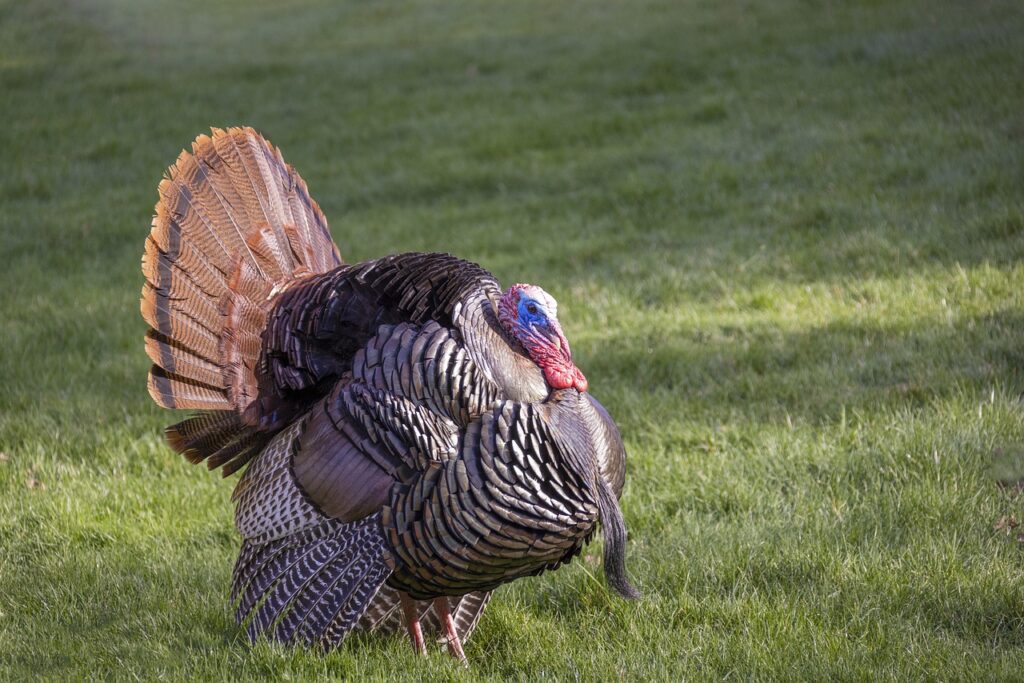

Once nearly wiped out and absent from more than half the United States, wild turkeys have made an astonishing recovery – from just 200,000 birds in the 1930s to more than 7 million today. Once extinct in 18 states, they now roam in 49 states, including many areas where they hadn’t been seen in over 100 years. It’s not just a comeback – it’s one of the most successful wildlife recovery stories in U.S. conservation history.
A Collapse Few Thought Reversible
By the early 20th century, wild turkeys had plummeted from an estimated 10 million pre-colonial birds to around 200,000. They were completely gone from states like Vermont and New York by the mid-1800s. Deforestation and unregulated hunting decimated their numbers, and by the 1930s, many wildlife experts believed they were beyond saving.
Innovation and Relocation
In the 1950s, a breakthrough came with cannon-netting, a method using nets propelled by explosives to safely capture wild turkeys. Unlike earlier captive-breeding failures, this technique relocated healthy, wild birds directly into suitable habitats. This strategy helped re-establish turkeys in over 30 states within just a few decades.
The Power of Collaboration
Founded in 1973, the National Wild Turkey Federation (NWTF) led nationwide efforts to restore turkey populations. Since then, the NWTF has:
- Invested over $500 million in conservation
- Helped conserve or enhance 22 million acres of habitat
- Partnered with agencies to reintroduce turkeys in 49 states
In regions like New York and New England, turkey recovery also benefited from a unique environmental shift: forests regenerated on abandoned farmland after the Great Depression, providing the perfect habitat for their return.
A Comeback With Conditions
Despite their current abundance, wild turkeys face new threats. States like Missouri and parts of the Southeast are now seeing population declines – with causes including habitat fragmentation, nest predation, disease, and climate change. If conservation efforts slow, today’s success could reverse.
A Story Worth Protecting
The wild turkey’s recovery proves that science-based conservation works. It also reminds us that wildlife rebounds don’t happen by accident – they require sustained funding, policy support, and public involvement. To keep wild turkeys thriving, we must continue to protect the forests, grasslands, and wetlands they depend on. For more information on wild turkey conservation and how you can get involved, visit the National Wild Turkey Federation’s website at www.nwtf.org.