
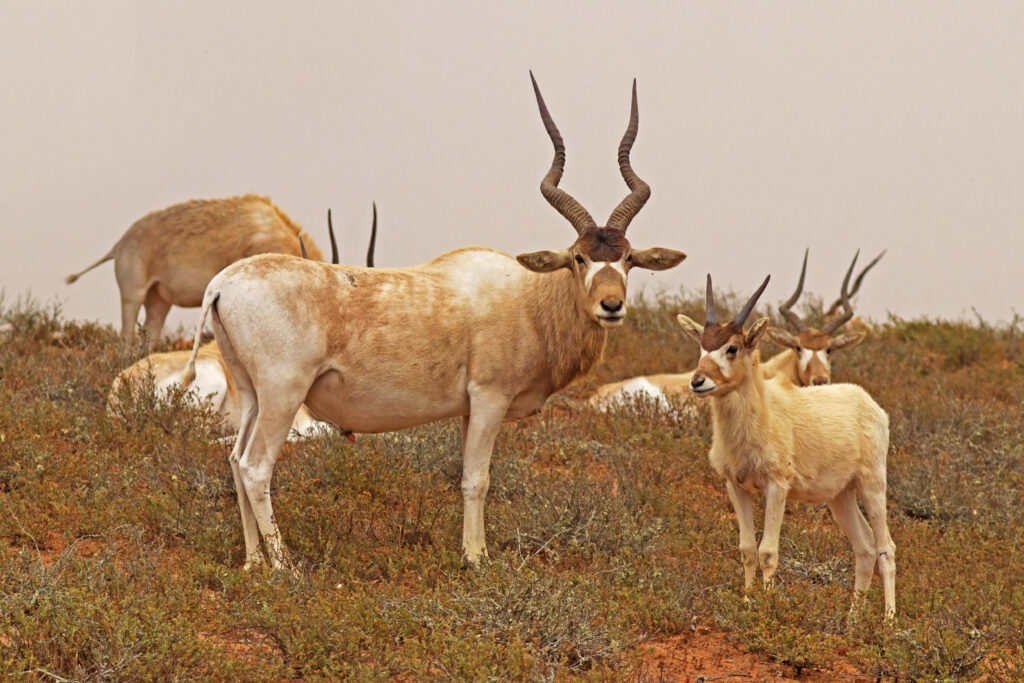

Imagine being dropped into the middle of the Sahara – no water, 120 °F heat, and endless sand. You’d survive just three days. The addax antelope? It can live like that for years – no tools, no tricks, just biology. It might not grab headlines, but this animal embodies one of the world’s most remarkable feats of adaptation.
The addax changes its coat with the seasons: nearly white in summer to reflect sunlight, dark gray‑brown in winter to absorb warmth, helping to regulate body temperature without water loss. It can raise its body heat to 106 °F by day and cool down naturally at night, avoiding the need for evaporative cooling, which conserves precious moisture.
Water? It gets almost all of it from moisture-rich grasses, shrubs, and desert plants – even when they appear dry. Extra moisture? It condenses from dew. Its kidneys and digestive system are so efficient that its urine is highly concentrated and its feces are dry.
Its behavior is equally smart. Moving mainly at dawn, dusk, and night, the addax avoids midday heat. It rests in self‑dug depressions up to 8 in (20 cm) deep, which stay 5–6 °F cooler than the surface. It also selects cooler microclimates – shaded dunes, wind‑cooled ridges – and orients into breezes that help cool its body.
Built for sand travel, its broad, flat hooves spread its weight and grip shifting dunes. Inside, intricate nasal turbinates condense moisture from exhaled air – reclaiming up to 70 % of respiratory water loss.
Despite all this, the addax is hanging on by a thread. Wild populations have plummeted to fewer than 100 mature individuals, with some estimates as low as 30–50 in Niger and Chad. Once shielded by the vast remoteness of the Sahara, the addax is now exposed to growing human activity: oil exploration, off-road vehicle use, and military operations have penetrated even the most isolated parts of its range. These intrusions damage fragile habitats, interrupt natural behaviors like breeding and migration, and push this desert specialist ever closer to extinction.
Yet there is hope. Captive breeding programs and reintroductions are gaining traction. In Chad’s Ennedi Reserve, 10 addaxes were reintroduced, aiming to establish a population of over 500 individuals. Similar efforts elsewhere offer a lifeline – but success depends on real protection, not just in science, but on the ground.Take‑Away: The addax is a desert survival engineer – evolution perfected. But without urgent conservation, we lose not just a species, but a blueprint for resilience. It’s time we act as smart as the addax lives.