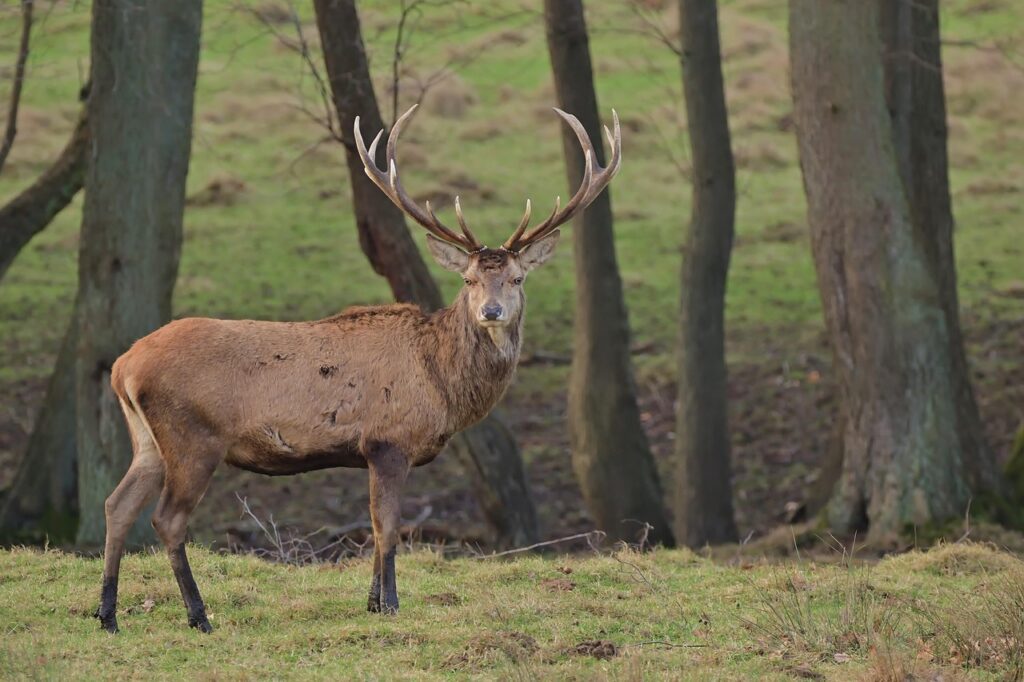

Originally native to Europe, parts of Asia, and North Africa, the red deer (Cervus elaphus) has made its way across the globe – intentionally introduced to regions like the Americas, New Zealand, and Australia. Known for its impressive antlers and adaptability, the red deer has become both a prized species and a growing ecological concern in its non-native environments.
In its native range, the red deer plays a balanced role within its ecosystem. But in introduced regions, its unchecked growth is causing measurable harm. For example, in Australia’s Royal National Park, researchers found that areas with high red deer density host 30 to 70 percent fewer native plant species compared to less affected areas. These animals consume thick, moisture-rich grasses that are also favored by native herbivores. As they graze, red deer don’t just remove plants – they also trample vegetation and compact the soil, which accelerates erosion and disrupts natural regeneration.
This ecological pressure extends beyond plant life. In the temperate forests and grasslands of northern Chile and Argentina, red deer compete directly with native species like the endangered southern Andean deer (Hippocamelus bisulcus) and the guanaco, a wild South American camelid. Studies in these areas have shown that red deer are more aggressive grazers and can outnumber native herbivores by large margins, especially in fragmented habitats. In some parts of Argentina, red deer populations have increased by more than 200 percent over the past two decades, while numbers of H. bisulcus have continued to decline.
Natural predators like the puma (Puma concolor) offer some population control, but not enough to curb red deer expansion in many regions. In most cases, population management must be carried out by human intervention, often through regulated control programs.
RELEVANT READING | From Success to Strain: The Whitetail Deer Dilemma
The takeaway: while red deer may be valued for their cultural and recreational significance, their introduction into non-native ecosystems comes at a steep environmental cost. Monitoring population trends and implementing science-based control measures are essential steps in mitigating their impact – before native species and habitats suffer irreversible damage.