
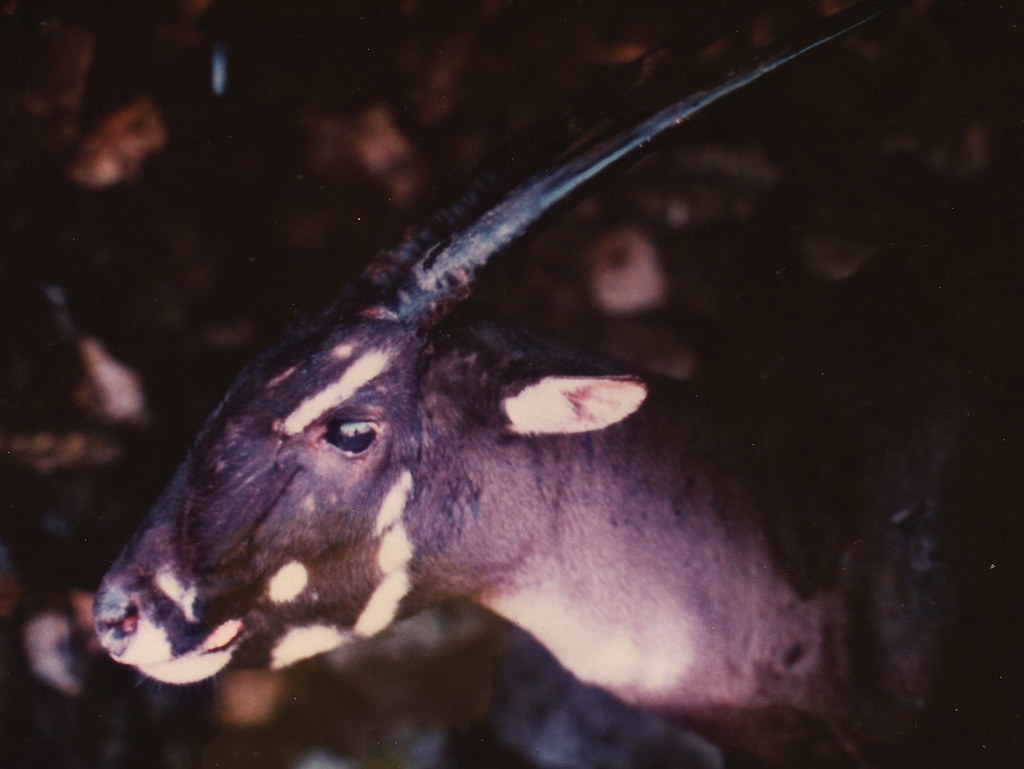

When a species is dubbed the “Asian unicorn,” it inspires wonder – but the reality is far more urgent. The saola (Pseudoryx nghetinhensis) is one of the world’s rarest and most elusive mammals, seen in the wild as few as twice last century. Camera traps captured images in 1999, and most recently in September 2013 – over a decade ago now – highlighting how seldom they appear on nature’s stage.
Standing just 80–90 cm tall at the shoulder and weighing between 80–100 kg, the saola – sometimes called the “spindle‑horned bovid” – bears a striking dark coat with distinctive white facial markings and two parallel horns up to 50 cm long. Though a member of the Bovidae family (the same broader group as cattle and antelopes), genetic studies suggest it diverged early from other bovines, placing it in its own genus, Pseudoryx.
This creature was entirely unknown to science until May 1992, when a joint team from Vietnam’s Ministry of Forestry and WWF identified a bizarre skull with long, straight horns in a north-central Vietnam village – the first large mammal discovery in over 50 years.
Today, the saola is classified as Critically Endangered by the IUCN, and researchers estimate fewer than 100 individuals may remain in the wild. The main threats are indiscriminate wire snares—set not to catch saola, but which ensnare them nonetheless — and habitat fragmentation driven by deforestation, logging, and infrastructure projects like roads and hydropower.
But this conservation story isn’t without hope. Patrol teams have removed more than 130,000 snares since 2011 from saola habitat, a remarkable, measurable achievement. The Saola Working Group – part of IUCN’s Species Survival Commission – champions a “One Plan Approach,” combining in‑situ protection with plans for a captive breeding program at Vietnam’s Bach Ma National Park.
By 2022, nearly 146,000 snares had been removed from just a 120‑square‑mile zone in the Central Annamites – demonstrating that effective action is possible, and that conservation results can be measured precisely, not vaguely.Takeaway: The saola may be a “unicorn” in its rarity, but the numbers tell the real story: fewer than 100 individuals on Earth, detection only twice in over 25 years, yet over 130,000 snares removed in that time. It’s proof that targeted, fact‑driven efforts can make a difference – and that the survival of this extraordinary species still lies within reach.