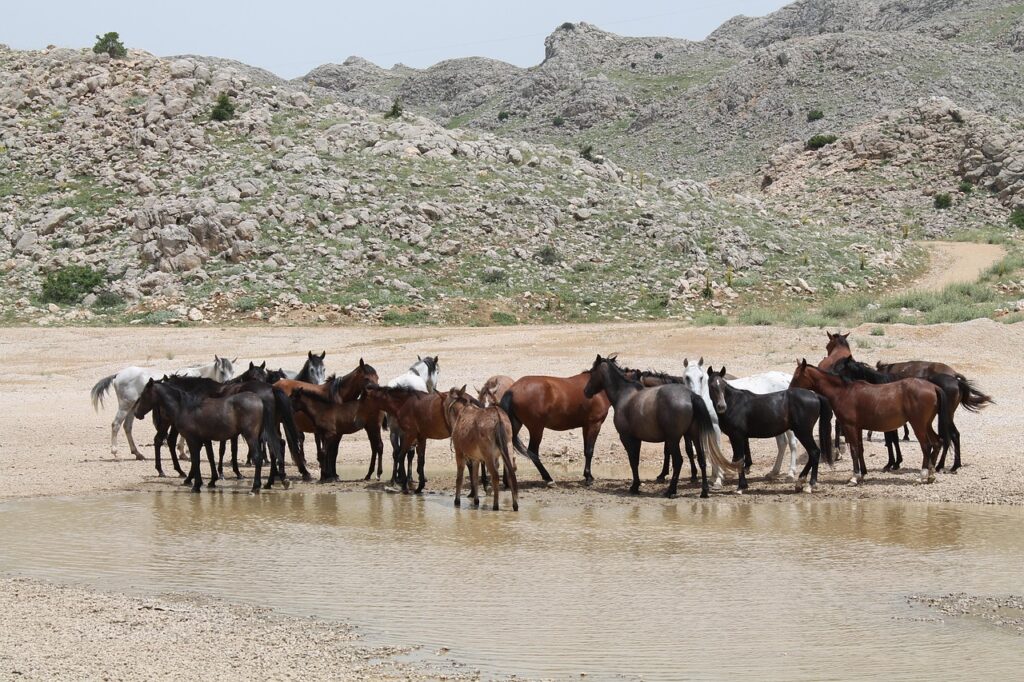

Across the American West, the number of wild horses and burros roaming public rangelands has surged far beyond what fragile ecosystems can support. As of March 2024, the Bureau of Land Management (BLM) estimates roughly 73,000 of these animals inhabit public lands – nearly triple the sustainable threshold of 27,000. This imbalance is not just an animal welfare issue – it’s a land‑health emergency.
Overpopulation and Its Ecosystem Toll
With populations swelling at nearly 20% per year, many herds have reached critically unsustainable levels. Without intervention, this will inevitably lead to increased animal suffering through starvation, dehydration, and disease, often accompanied by severe land degradation.
These larger-than-capacity herds trample vegetation, compact soils, overgraze grasses and shrubs, and erode riparian zones. Invasive species like cheatgrass often take hold in these degraded areas, reducing plant diversity and further destabilizing ecosystems.
Moreover, wild horses and burros – non-native, free-roaming animals – compete directly with native wildlife for limited forage and water. Their presence can exclude native ungulates like bighorn sheep from watering sites or desirable habitat.
Perhaps most startling: research from Wyoming shows that when horse populations exceed sustainable levels by threefold, sage-grouse nest survival drops by 8%, chick survival declines by 18%, and juvenile survival is down 18% – numbers that underline the urgency of effective management.
Why This Matters – and What It Means for Western Lands
- Eroded Ecosystems: Overgrazed and trampled landscapes hamper regrowth, intensify erosion, and encourage invasive plants, undercutting biodiversity.
- Native Wildlife at Risk: With limited water and forage, competition forces native species to retreat – impacting everything from small desert mammals to iconic birds like sage-grouse.
- Animal Welfare Concerns: Allowing herds to balloon unchecked ensures painful outcomes – for the horses and burros and the land they inhabit.
Core Takeaway
The escalating overpopulation of wild horses and burros – numbers soaring to nearly 73,000 on public lands – threatens the very ecology of the American West. It’s not just a numbers issue; it’s a warning: when feral equine populations triple sustainable thresholds, land health collapses, native wildlife suffers, and the animals themselves face suffering. Conservation win isn’t about extremes – it’s about restoring balance.