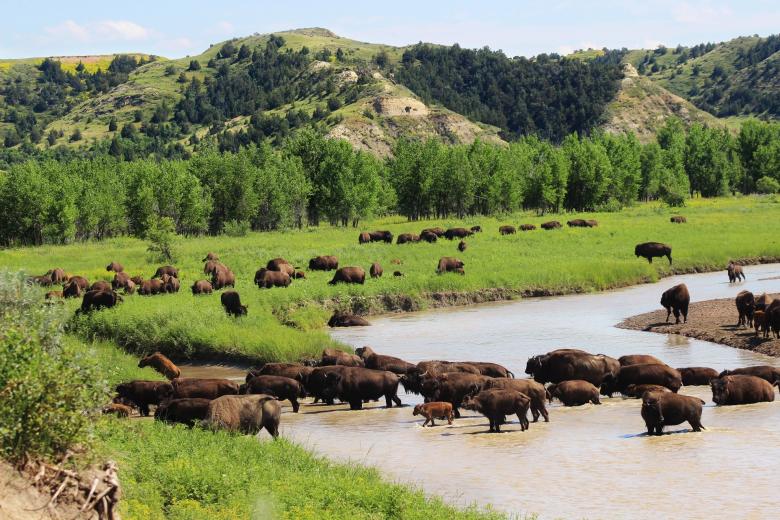

Once numbering 60 million, bison herds were reduced to near extinction as settlers expanded westward in the 1800s. This transformed the landscape and the lives of the Indigenous peoples who relied on them and stripped the Great Plains of one of its most vital species. Today that story is beginning to change. Across North America a remarkable restoration effort is underway. More than 540 bison have returned to Tribal lands as part of an Indigenous-led movement to bring the American bison back to its ancestral home. In 2024 alone, 543 bison were transferred from The Nature Conservancy’s preserves to Tribal nations across 10 states, including Oklahoma, Texas, South Dakota, Minnesota, and Washington. Since 2020, more than 2,300 bison have been returned – a powerful step toward healing both the land and the communities that have long cared for it.
For many Indigenous Native tribes, losing the bison meant losing something deeply spiritual. Their return is not just about restoring a species, but about reclaiming identity, sovereignty, and connection to place. Bison are ecological engineers and cultural keystones – their grazing aerates soil, spreads native seeds, and strengthens prairie resilience. Their presence reconnects Indigenous communities with traditional knowledge systems, food sovereignty, and economic opportunity. As the InterTribal Buffalo Council says, the bison’s return is “a journey of healing – for the land, our people, and future generations.”
The Movement’s Scope
This nationwide effort involves organizations such as the InterTribal Buffalo Council, Tanka Fund, and The Nature Conservancy. Tribal lands include those of the Assiniboine and Sioux Tribes of Fort Peck, Fort Belknap Indian Community, Rosebud Sioux Tribe, Blackfeet Nation, Quapaw Nation, Osage Nation, and others across the Great Plains, Midwest, and Pacific Northwest.
Numbers That Tell the Story
- 543 bison returned in 2024 alone, from Nature Conservancy preserves like Broken Kettle Grasslands (Iowa), Tallgrass Prairie Preserve (Oklahoma), and Zapata Ranch (Colorado).
- 2,300+ bison returned since 2020
- 10 states involved
- 86 Tribal Nations currently members of ITBC
Restoring bison requires dedicated caretaking, habitat management, veterinary support, and long-term planning. But the momentum is clear: ecological and cultural benefits are spreading as more communities participate.
Takeaway
This is more than conservation – it’s restoration of relationships. Every bison returned revitalizes soils, native grasses, traditions, and cultural identity. Each step they take on Tribal lands is a stride toward ecological balance and Indigenous sovereignty.