
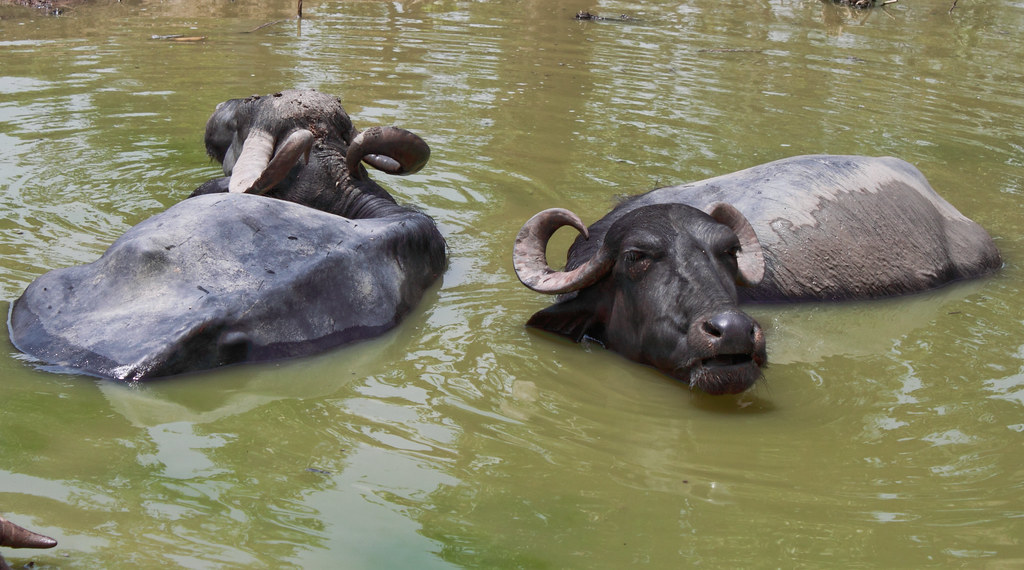

India is facing a conservation crisis: fewer than 4,000 wild water buffalo (Bubalus arnee) remain worldwide, and about 90% of them are found in India. Central India – a historically important stronghold for the species – has suffered a steep decline. Today, only 30 to 35 individuals are estimated to survive in this region. In one protected area – Udanti-Sitanadi Tiger Reserve in Chhattisgarh – just six males remain, and no females. This dramatic population collapse threatens not only the species, but also the delicate balance of grassland ecosystems they once helped sustain.
A new study recommends a bold recovery plan: reintroduce wild water buffalo from northeast India – where populations are relatively stable – into Kanha Tiger Reserve in Madhya Pradesh. The proposal involves moving around 200 buffalo to Kanha in groups of 15 to 20 at a time. The targeted habitat covers about 150 square miles (roughly 96,000 acres) of low-lying grasslands within the reserve, areas that have seen little human disturbance. These grasslands, once more widespread, have gradually degraded or been overtaken by forest since the 1970s.
Why bring back buffalo?
As “mega-herbivores,” wild water buffalo feed on a wide variety of grasses and plants. Unlike smaller herbivores that selectively graze, buffalo help suppress invasive weeds and shrubs, promoting plant diversity and maintaining open landscapes. Scientists point out that since the buffalo disappeared from central India, this ecological role has been left unfilled – leading to habitat shifts that harm other wildlife too.
Still, the plan is not without challenges. Kanha is home to a dense population of tigers, and young buffalo calves would be especially vulnerable to predation. There’s also the question of genetics: while researchers argue that northeast and central Indian buffalo are genetically similar enough for reintroduction, others urge caution and call for further study. To reduce risk, the study proposes beginning with predator-proof enclosures of 0.4 to 2 square miles (about 250 to 1,300 acres) where buffalo can safely breed before being released to roam freely.
What should you remember?
Central India’s wild water buffaloes are nearly extinct locally – just a few dozen remain in regions once rich with them. Reintroducing 200 buffaloes into Kanha could reverse ecological degradation, restoring grasslands and balancing vegetation. But success depends on genetic matching, predator management, and careful staging (enclosures then release).
If this succeeds, it’s more than saving a species – it’s reclaiming a role in the ecosystem. The lesson is: restoring mega‑herbivores doesn’t just preserve wildlife; it restores landscapes. And that’s something people will notice, talk about, and hopefully act upon.