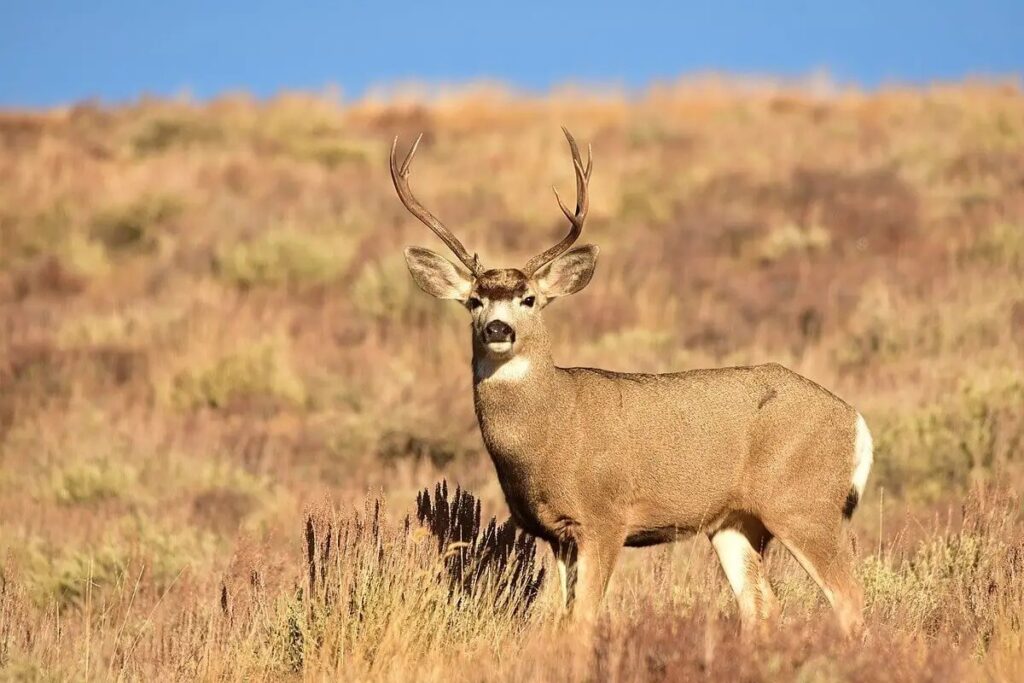

Mule deer numbers have plummeted since the 1960s – from an estimated 8–10 million to just 2.5–3 million today. In Utah’s Uinta-Wasatch-Cache National Forest, more than 4,000 acres of overgrown forest have recently been restored to help bring them back. Crews thinned dense pinyon-juniper woodlands, opening up pockets of sagebrush and grassland habitat. By reducing tree density, land managers are giving sagebrush, shrubs, and native grasses a chance to return – the vital plants mule deer depend on to survive, especially through harsh winters.
And that’s just the beginning. The U.S. Forest Service and its partners are planning to restore another 12,250 acres in the coming years. That’s a total of more than 16,000 acres of improved habitat in Utah – a major boost for a species that depends heavily on healthy landscapes to thrive.
Why Mule Deer Habitat Matters
Mule deer populations across the western U.S. have struggled in recent decades. Loss of habitat from human development, natural wildfires, invasive species such as cheatgrass and medusahead rye, and overly dense forests has made it harder for deer to find the food they need. Add to that pressure from predators (including coyotes, mountain lions, and in some places wolves) and increasing road networks, and it’s clear why restoration is so critical.
That’s where projects like this come in. Under the “Million Bucks” initiative – a partnership between the U.S. Forest Service and the Mule Deer Foundation – large-scale habitat projects have been underway since 1989. The recent work in the Spanish Fork Ranger District of Utah is just one example, where crews are carefully removing trees to allow more sunlight to reach the forest floor. The result: a better mix of nutritious plants for mule deer and other wildlife, including sage grouse and songbirds.
These efforts aren’t just about numbers – they’re about ecosystems. When land is restored at this scale, entire plant and animal communities benefit.
RELEVANT READING | Mule Deer Conservation: Protecting a Western Icon
What’s the Big Takeaway?
The restoration of more than 16,000 acres of mule deer habitat in Utah shows that focused, science-based land management works. It’s not just about clearing trees – it’s about bringing back the right mix of native plants that mule deer need to survive.
This work also proves the power of partnerships. After 25 years, the Forest Service and the Mule Deer Foundation are still working together, combining resources, knowledge, and manpower to make lasting change on the ground.
Here’s the bottom line: Healthier habitats mean healthier mule deer. And when we restore the land, we don’t just help one species – we help entire ecosystems bounce back. But there’s still more work to do. Without continued action, mule deer and other wildlife will keep declining, and the balance of these wild landscapes will remain at risk.