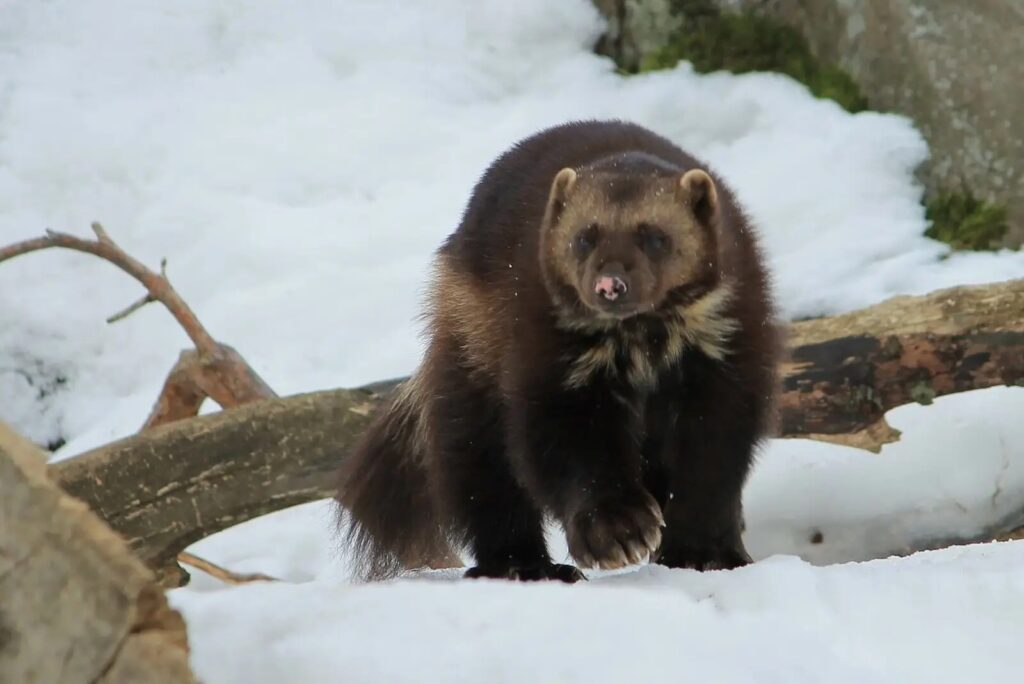

The wolverine is the largest land-dwelling member of the weasel family at around 35 pounds. Built for cold and snow, it moves on short, strong legs and broad feet that work like snowshoes. Wolverines depend on deep snow to dig dens and raise their young
The wolverine is one of the most wide-ranging mammals on Earth, covering territories that can span more than 500 square miles. These rugged wanderers thrive in frozen wilderness where few others dare to live.
Wolverines are true legends of the wilderness. They’ve been known to travel up to 15 miles in a single day and can climb rugged mountain slopes with ease. Despite their size, they’re fearless hunters and scavengers – capable of driving off much larger animals like wolves or bears when defending a meal. Their thick, frost-resistant fur keeps them warm through brutal winter storms, and their powerful jaws can crush through frozen meat and bones with ease. Every trait of the wolverine screams survival.
Wolverines are remarkable not just for their strength, but for the important role they play in their ecosystems. As scavengers, they help keep wildlife populations balanced and clean up after other predators, contributing to the health of the landscapes they inhabit. Their presence is a sign of a thriving, functioning ecosystem, especially in snowy mountain regions.
According to the U.S. Forest Service, scientists track wolverines using snow-tracking, remote cameras, and DNA sampling. Non-invasive genetic sampling and hair-snag/remote-camera arrays have proven effective in identifying individual wolverines across wide landscapes. Meanwhile, studies published in ScienceDirect and Nature highlight the importance of large, connected habitats with consistent spring snow cover and minimal human disturbance for sustaining populations. Community science programs and public awareness campaigns further strengthen these efforts, giving people a hands-on role in supporting one of North America’s most elusive carnivores.
Takeaway: The wolverine’s future depends on more than its strength – it relies on the conservation of cold, connected landscapes. Individuals can make a difference by supporting organizations that secure mountain habitat, reduce carbon emissions that erode snowpack, and advocate for balanced land-use policies. Preserving snow, habitat corridors, and wilderness access isn’t just about one species – it’s about keeping entire alpine ecosystems alive for generations to come.