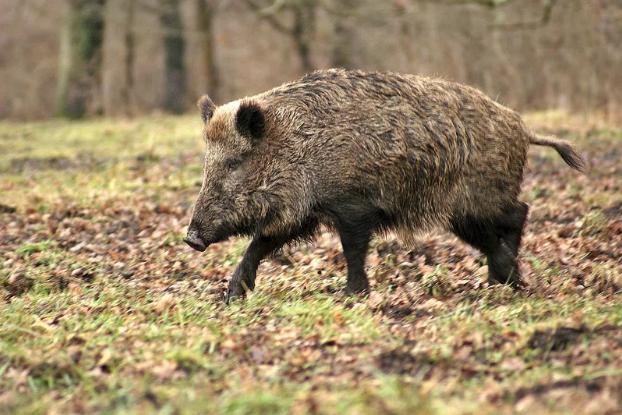

Wild pigs are now one of the most destructive invasive mammals in North America. Found in at least 38 states, their population is estimated at 5-6 million animals. The economic consequences are severe. Roughly $1.5 billion a year in combined damage and control costs, with more than $800 million hitting agriculture directly (USDA). Control costs refers to the cost of managing, reducing, and preventing feral pig populations and their damage.
The reason North America has such a severe pig problem is simple: feral pigs reproduce faster than any other large mammal on the continent. USDA Wildlife Services, a leading authority on feral swine biology, reports that females begin breeding at 6–8 months and produce 4–6 piglets per litter, often twice per year. That’s 8–12 piglets annually, with a roughly 50/50 male-to-female ratio. This rapid reproductive cycle is the primary force driving today’s invasion pressure.
Where Did Wild Pigs Come From?
Today’s wild pigs are a mix of escaped domestic swine, Eurasian wild boar, and hybrids. Europeans released pigs in the 1500s because they needed a low-maintenance, fast-breeding “walking food supply” for expeditions and early settlements. Centuries of escape, free-ranging practices, and intentional transport helped populations take hold. Their broad diet and ability to thrive in wetlands, forests, grasslands, and farmlands make them exceptionally hard to contain.
Ecological and Agricultural Impacts
Rooting and wallowing disrupt soils, accelerate erosion, and reduce native vegetation’s ability to recover (USFS). These disturbances open the door for invasive plants and reduce food and habitat for native wildlife.
Agricultural losses are significant:
• About $800 million in crop and livestock damage annually (USDA).
• An additional $40 million each year from disease transmission and predation impacts, based on producers surveyed across 13 states (APHIS).
• Texas alone has reported damage and control costs approaching $871 million in one analysis (Texas Farm Bureau).
Feral pigs also carry more than 30 bacterial and viral pathogens and multiple parasites. Foot-and-mouth disease remains a top concern due to its potential to devastate livestock herds.. Wallowing and runoff can contaminate streams and wetlands used by wildlife, pets, and people.
Why Control Is So Difficult—and What Actually Works
Feral pigs are hard to control for a simple reason: they reproduce fast, move freely across large landscapes, and quickly adapt to pressure. Isolated efforts rarely last. When pressure eases, populations rebound.
That said, coordinated control does work when it’s applied at scale.
Results from the Feral Swine Eradication and Control Pilot Program—led by the USDA and NRCS—show what’s possible when agencies and neighboring landowners work together. Across selected pilot landscapes, pigs were jointly trapped, removed, and monitored over multiple years.
The outcomes were significant:
- 70 percent population reduction within two years
- 99 percent reduction in rooting damage on treated properties (NRCS)
Producers also reported roughly a 40 percent decrease in agricultural losses once sustained control was in place.
The takeaway is scale and consistency. Removal must continue year after year, and adjacent landowners have to stay aligned. That’s why the USDA National Wildlife Research Center continues developing integrated tools—ranging from advanced trapping systems to aerial removal methods and improved detection technologies—to support long-term, landscape-level management.
Takeaway
This invasive species is costing the U.S. $1.5 billion a year, degrading habitats, and pushing diseases into livestock and wildlife. The data is clear, coordinated control programs can dramatically cut damage.