
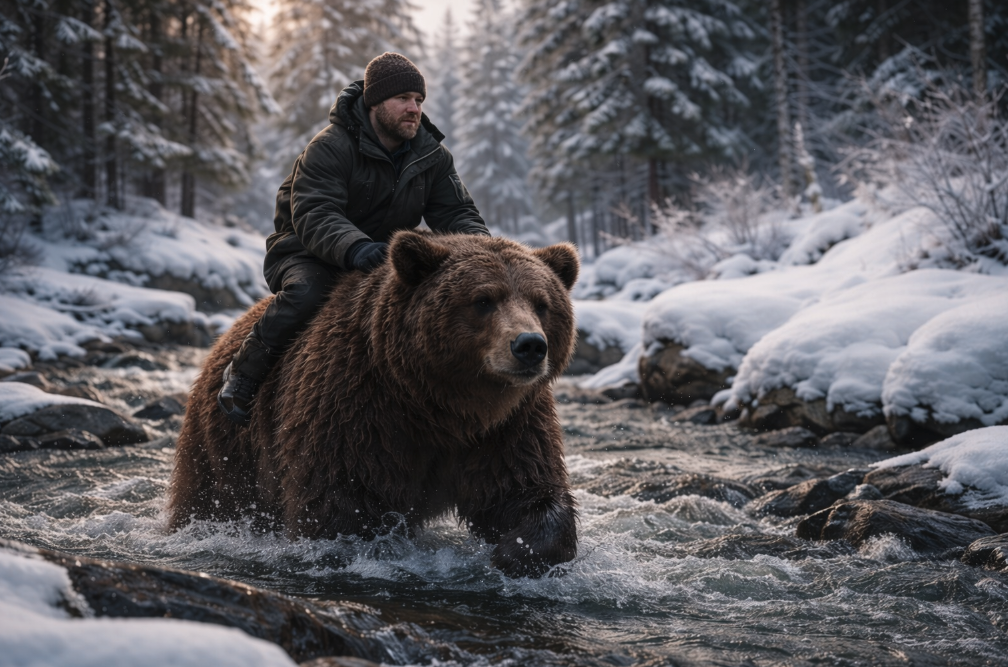

Artificial intelligence is transforming how content is created and shared. That includes wildlife imagery — and not always for the better. Hyper-realistic AI-generated videos and photos of animals are spreading across social platforms, often indistinguishable from reality. These clips range from humorous to dramatic, but their realism masks a deeper conservation problem: they can reshape how people understand wildlife and biodiversity in ways that undermine efforts to protect it.
AI Videos Blur the Line Between Fact and Fiction
Recent work by researchers at the University of Córdoba highlights a worrying trend: AI tools can produce wildlife content that appears authentic but depicts behaviors, interactions, or scenarios that would never occur in nature. For example, AI may generate videos showing predators and prey playing together, animals behaving like pets, or improbable human-wildlife encounters — all designed to drive views.
In societies already disconnected from nature and heavily influenced by social media, these videos can shape public perception of how animals truly behave. Children and adults alike may come to believe that wild animals are friendlier, more abundant, or less dangerous than they actually are because the AI content looks real.
Conservation Consequences of Misleading Wildlife Imagery
This isn’t just about misinformation. These AI-generated portrayals can have real conservation impacts:
- Reduced Public Awareness of Threats: If a species appears plentiful or benign, urgency around its conservation can diminish. People may believe a species is doing fine when, in reality, it faces significant threats.
- Shifts in Attitude Toward Wildlife Management: Implausible depictions of conflict — for example, predators repeatedly attacking livestock or people — can fuel fear or negative attitudes toward species that actually need protection.
- Increased Demand for Exotic Pets: Videos portraying wild animals as approachable or tame can encourage interest in owning them, helping fuel illegal wildlife trade and harming both animal welfare and species survival.
- Erosion of Trust in Real Science: As AI content proliferates, people may grow skeptical of authentic field footage and scientific documentation, weakening support for evidence-based conservation.
For conservation work to succeed, public understanding must be grounded in reality. When AI content reshapes what people think animals do, it undermines that foundation.
What Can Be Done
Experts stress the need for better detection, labeling, and literacy. Automatic tagging systems that identify AI content are emerging, but they rely on detection tools that are still imperfect. For now, responsibility falls on platforms, educators, and conservation communicators to help people distinguish between real and synthetic content.
Wildlife managers can also play a role by responding quickly when misleading content emerges — clarifying what’s real, why it matters, and what the science actually shows. In a world where seeing isn’t always believing, context becomes as important as the image itself.
Conservation Takeaway
AI is reshaping how wildlife appears online. Without clear ways to distinguish real from synthetic, it can distort public perception, undermine conservation efforts, and create dangerous misconceptions. In the digital age, conservation must protect not only nature, but truth.