
Across South Texas, an unconventional antelope has become a real-world test case for how invasive species management, conservation economics, and food systems can intersect.
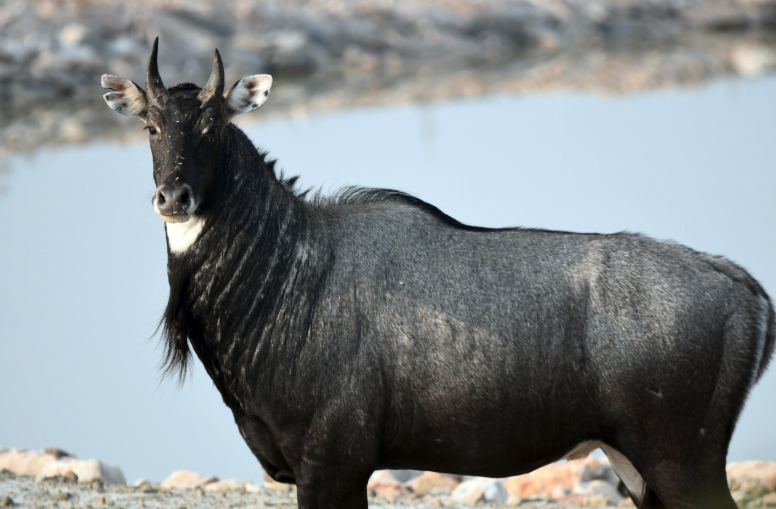
Nilgai are the largest antelope species in Asia. Native to India and parts of Nepal and Pakistan, they evolved in open grasslands and scrub habitats, where they are highly adaptable to heat, drought, and variable forage. Adult nilgai can weigh up to 600–700 pounds, making them comparable in size to a small cow. They are fast, wide-ranging grazers and browsers, capable of traveling long distances in search of water and food.
Nilgai were introduced to South Texas in the 1920s primarily for exotic game and livestock experimentation on large private ranches. During that period, major Texas ranches were actively importing non-native species to diversify wildlife, enhance recreational hunting opportunities, and test animals that could tolerate heat, drought, and sparse forage. Nilgai were seen as an attractive candidate because they are large, hardy, resistant to disease, and capable of thriving in semi-arid environments similar to their native range in India.
At the time, there was little understanding of invasive species dynamics or long-term ecological risk. The focus was economic and recreational, not ecological. Nilgai adapted quickly to South Texas conditions, escaped confinement, and established free-ranging populations. With few natural predators and high reproductive success, their numbers expanded beyond initial expectations.
Texas’ approach to nilgai is pragmatic: regulated harvest on private land, year-round seasons, and managed quotas. Landowners deliberately keep harvest levels below biological replacement rates. Take too many in one year and future populations collapse. Take too few and overpopulation degrades habitat. The result is a stable population that is actively managed rather than ignored.
The conservation outcomes are measurable.
Demand for nilgai harvests has increased by roughly 25% since before the pandemic, yet population control remains deliberate, not extractive. Hunting tags across the U.S. reached record levels in 2021, and wildlife restoration funding tied to hunting licenses and equipment has increased by 47% since 2019, reaching nearly $1 billion annually. These funds support habitat restoration, research, and enforcement across all species, not just those harvested.
Nilgai also highlight an under-discussed food system benefit: clean, wild protein. Unlike industrial livestock, nilgai are free-ranging, hormone-free, and never confined to feedlots. Their meat is comparable to beef in taste but is produced without irrigation-intensive feed crops, antibiotics, or concentrated waste systems. One animal can supply hundreds of meals with a fraction of the environmental footprint of conventional protein sources.
This “sustainable use” model becomes even clearer when contrasted globally. In India, where hunting was largely banned in 1972, nilgai populations have exploded. In Gujarat alone, numbers more than doubled to an estimated 250,000 animals in a decade. The result has been widespread crop destruction, escalating human-wildlife conflict, and illegal, often inhumane killings outside regulated systems. Without population management, conservation failures compound.
Nilgai management in Texas demonstrates a principle Conservation Frontlines continues to document globally: wildlife conservation succeeds when incentives align with ecological reality. Managed harvest funds habitat protection, stabilizes populations, reduces conflict, and produces clean protein that bypasses industrial food systems.
Conservation Takeaway
Invasive species management works best when population control, habitat health, and food systems are treated as connected variables. Nilgai shows that regulated harvest can restore ecological balance while producing clean, low-impact protein, turning a conservation problem into a functional solution.