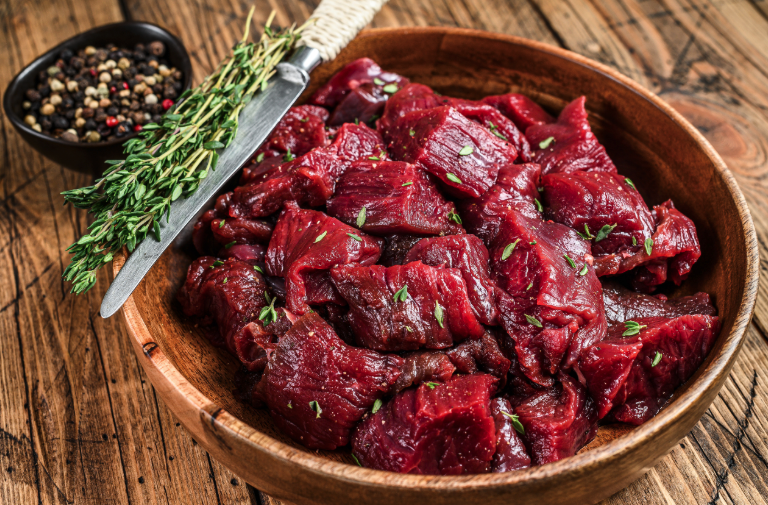

As debates around conservation often focus on habitat, species counts, or protected land, the role of food is frequently overlooked. What we choose to eat shapes landscapes, wildlife populations, and land-use decisions at scale. Wild game sits at the center of that conversation. It is not just a dietary choice, but the biological output of functioning ecosystems and active wildlife management. As conversations around food systems, conservation, and human health increasingly overlap, wild game offers a rare intersection of all three. Compared to farm-raised meat, wild game consistently shows nutritional advantages that stem directly from how these animals live on the landscape.
No Hormones, No Antibiotics, No Feedlot Inputs
From a conservation and health perspective, one of the most significant distinctions is what wild game does not contain. Wild animals are not exposed to growth hormones, prophylactic antibiotics, or formulated feed rations. Their protein is produced without irrigated monoculture crops, synthetic fertilizers, or concentrated waste systems. This absence reduces both chemical exposure for consumers and environmental externalities across landscapes.
Leaner Meat, Higher Protein Density
Wild animals move constantly. They forage, migrate, evade predators, and adapt to seasonal conditions. That daily energy demand produces meat that is naturally lean, with significantly lower total and saturated fat than conventional beef, pork, or poultry.
Analyses comparing wild game to farm-raised meats show higher protein concentration per serving, meaning more usable protein with fewer calories. For consumers managing cardiovascular health, insulin sensitivity, or overall caloric intake, that difference matters.
Favorable Fat Profiles and Micronutrients
Wild game often contains higher proportions of omega-3 fatty acids, particularly in species that feed on native grasses, forbs, and aquatic vegetation. Omega-3s are associated with reduced inflammation and improved heart health, nutrients that are typically deficient in modern diets dominated by grain-fed livestock.In addition, wild game tends to be rich in iron, zinc, and B vitamins, reflecting both diet diversity and muscle composition shaped by constant movement rather than confinement.
Health Outcomes Tied to Ecology
The nutritional advantages of wild game are not accidental. They are the direct result of functioning ecosystems. Animals feeding on native vegetation convert sunlight, water, and biodiversity into high-quality protein with minimal industrial input. In well-managed systems, harvesting wild game also supports population balance, habitat health, and funding for conservation through license fees and restoration programs.
This creates a rare alignment: food that benefits human health while reinforcing ecological stewardship.
Conservation Takeaway
Wild game isn’t just an alternative protein – it’s the result of healthy ecosystems and responsible wildlife management. Compared to farmed meat, it offers lean, nutrient-rich protein with far lower environmental and public-health costs, making it one of the most conservation-aligned food sources available.