
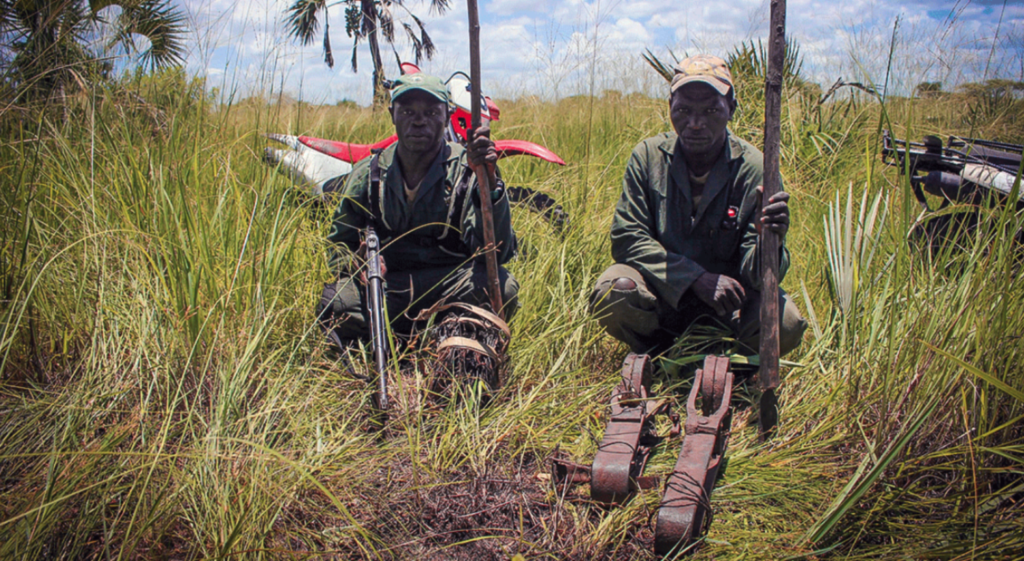

Across much of Africa, the primary driver of wildlife decline is not international trafficking syndicates or high-profile criminal networks. It is everyday bushmeat poaching, carried out quietly and repeatedly by people meeting basic survival needs.
In many rural regions, bushmeat is not a luxury or a black-market commodity. It is often the most accessible and reliable source of protein available. Where livestock ownership is limited, refrigeration is absent, and store-bought meat is financially out of reach. Wild animals become part of daily subsistence. This dynamic shapes wildlife loss at a scale that rarely draws attention, but steadily reduces animal populations over time.
Bushmeat Poaching Is a Survival Strategy
Bushmeat poaching refers to the illegal harvest of wild animals for local consumption or informal markets. In most cases, the meat never leaves the surrounding area. It is consumed within households or sold locally to meet immediate nutritional needs, making it a daily subsistence activity rather than an organized commercial trade.
Because this activity is decentralized and widespread, it often receives far less attention than international wildlife trafficking, even though its cumulative impact is substantial. The Wildlife Conservation Society has documented this pressure across Central, West, and East Africa, identifying unsustainable bushmeat hunting as one of the most serious threats to wildlife populations in tropical ecosystems.
The tools used in bushmeat poaching intensify its ecological impact. Wire snares are inexpensive, easy to deploy, and operate continuously without supervision. They are indiscriminate by design, capturing any animal that triggers them regardless of species or size. Field teams across southern and eastern Africa report removing tens of thousands of snares each year, often finding them replaced within weeks. While enforcement can reduce snare numbers temporarily, wildlife losses often resume when patrol pressure declines. The Food and Agriculture Organization of the United Nations has linked this pattern to food access constraints, noting that “in areas where people lack reliable access to food, wild meat becomes a critical source of protein despite legal restrictions.”
What Long-Term Reductions Actually Require
Where bushmeat poaching has declined over time, wildlife protection has been paired with systems that address both conservation and human needs. These systems typically combine reliable access to alternative protein, legal and regulated meat supply chains, community-based wildlife management, and consistent land governance alongside enforcement. Regions with functioning management structures show lower long-term illegal harvest rates than areas that rely on patrols alone. Wildlife recovery improves when people are no longer forced to choose between conservation laws and feeding their families.
Conservation Takeaway
Bushmeat poaching persists across much of Africa because it is rooted in survival, not organized criminal enterprise. Its cumulative impact drives long-term wildlife declines, even when individual incidents go unnoticed.
Lasting conservation outcomes depend on addressing food security, livelihoods, and governance alongside enforcement. Strategies that account for human reality are more likely to reduce pressure over time than those focused on prohibition alone.