
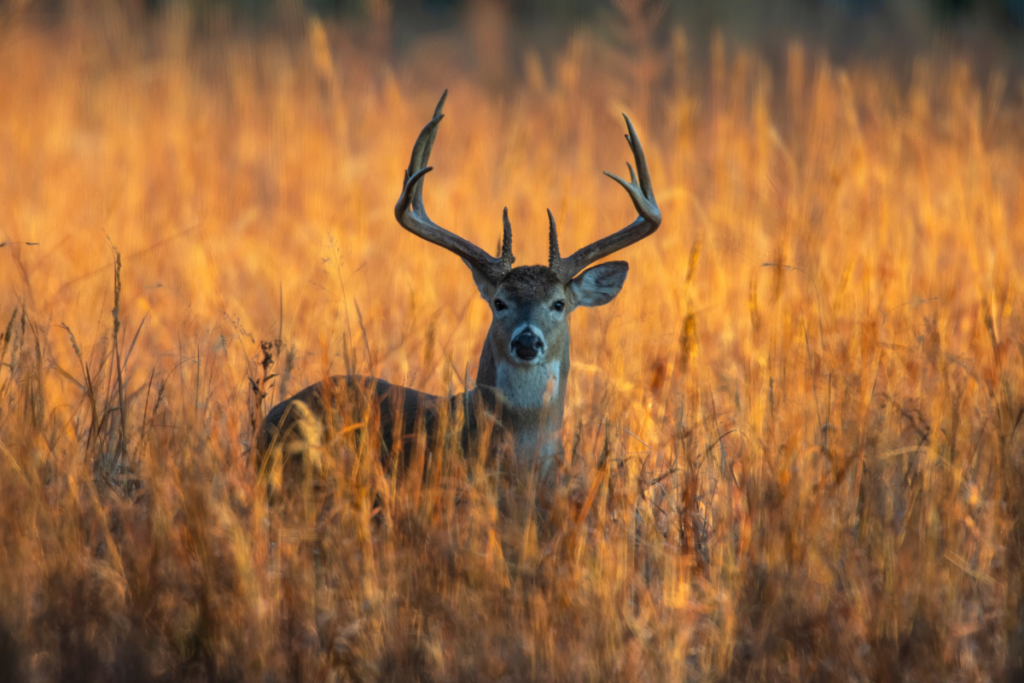

Across North America, two iconic deer species are responding to the modern world in very different ways.
White-tailed deer have adapted well to fragmented, human-dominated landscapes. Mule deer, by contrast, tend to decline in areas with expanding suburbs, highways, and intensive development.
Wildlife biologists describe this difference in clear ecological terms: synanthropic adaptation versus anthropophobic behavior.
Whitetails: A Synanthropic Success Story
A synanthropic species benefits from living near humans and the environments we modify. That definition increasingly fits the white-tailed deer.
Edge habitat is their wheelhouse. Subdivisions carved into former timber tracts create a patchwork of lawns, ornamental shrubs, woodlots, drainage corridors, and agricultural edges, precisely the mosaic that whitetails evolved to exploit. Add to that:
- Reduced predator presence in suburban areas
- Food-rich landscaping and agricultural crops
- Regulated hunting pressure in certain municipalities
- Winter refuge created by human infrastructure
The outcome has been population growth and geographic expansion. Across much of the East and Midwest, white-tailed deer rebounded significantly during the 20th century and now occupy most suitable habitat within their historic range, including areas that previously supported lower densities.
They are behaviorally flexible. They alter movement patterns around traffic. They shift feeding to nocturnal windows in high-disturbance zones. They tolerate noise and human scent far better than many large mammals.
In short, whitetails adapted to us.
Mule Deer: The Anthropophobic Pattern
Mule deer tell a different story.
While they can use agricultural valleys and transitional habitats, mule deer generally exhibit stronger avoidance of sustained human disturbance compared to white-tailed deer.
Their evolutionary history is tied to:
- Open sagebrush basins
- High desert ecosystems
- Mountain foothills
- Long-distance seasonal migration routes
Different from whitetails, mule deer depend heavily on expansive, contiguous landscapes. Subdivision of land, energy development, fencing, and highway expansion fragment the migration corridors that define their annual life cycle.
Predator dynamics also intersect with these pressures. In several western states, mule deer share landscapes with stable or expanding populations of mountain lions, black bears, and reintroduction of wolves. Where habitat fragmentation compresses movement corridors, deer may face elevated predation risk, particularly for fawns during spring and early summer.
Research across the West has shown that mule deer often:
- Avoid or abandon habitat near sustained development
- Alter migration timing due to traffic, fencing, and infrastructure barriers
- Experience reduced fawn recruitment in fragmented or high-predator landscapes
Unlike white-tailed deer, which frequently adapt to edge habitat and suburban expansion, mule deer are more dependent on intact migration routes and large-scale landscape connectivity. When those systems are disrupted, population resilience declines.
What It Means for Modern Conservation
As North America continues to urbanize and energy infrastructure expands, wildlife will continue sorting itself along this spectrum:
- Species that adapt to human presence
- Species that retreat from it
Whitetails demonstrate the resilience of behavioral flexibility. Mule deer remind us that some wildlife still requires space, continuity, and low disturbance to thrive.
Both species are conservation success stories in different contexts. But only one is built for the cul-de-sac.
The lesson is straightforward: conservation cannot be one-size-fits-all. It must account for how each species responds to the human footprint and whether that footprint becomes an opportunity or obstacle.