
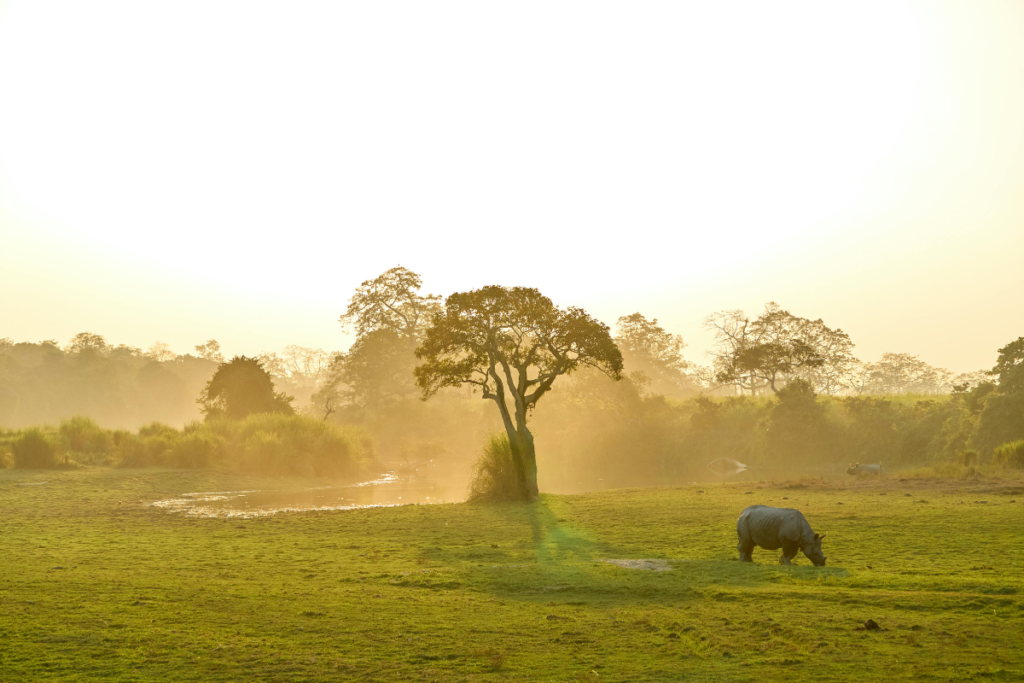
Roughly 150 years ago, wild mammals made up a significant share of life on land. Today, they account for a small fraction of total mammal biomass, which is defined as the combined weight of all mammals, including wildlife, humans, and livestock.
This shift didn’t happen overnight. It reflects a long-term reallocation of land, energy, and resources driven by human expansion.
As populations grew, landscapes were converted into farmland, pasture, and infrastructure. Wildlife didn’t vanish entirely, but it was pushed into smaller and more fragmented habitats. At the same time, livestock populations surged to meet global demand for food.
The result is a fundamental reshaping of mammal biomass on Earth.
Where the Biomass Went
Biomass, in this case, refers to the combined weight of all mammals and helps show how that weight is distributed between wildlife, humans, and livestock.
Today:
- Livestock accounts for the largest share of mammal biomass
- Humans make up a significant portion
- Wild mammals represent only a small percentage
This isn’t just about species counts, it’s about dominance. A single cow outweighs most wild animals, and when multiplied across billions of livestock globally, the balance shifts quickly.
According to global estimates highlighted by the World Bank, wild mammals now make up roughly five percent of total mammal biomass.
Why It Matters
This shift has implications beyond wildlife numbers.
When wild mammals lose ground:
- Ecosystems lose key functions like predation, grazing balance, and seed dispersal
- Landscapes become more dependent on human management
- Biodiversity becomes more vulnerable to further decline
At the same time, livestock systems require land, water, and inputs at scale, reinforcing the cycle of land conversion.
Conservation Takeaway
About 150 years ago, wild mammals made up roughly half of all mammal biomass. Today, they account for about five percent. Today mammal biomass is now concentrated in humans and livestock.