
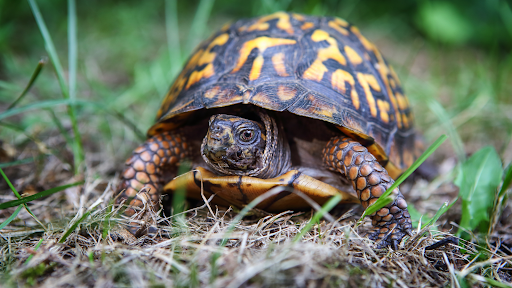

Restoring trees and shrubs along farm streams can bring wildlife back, including species like the Eastern box turtle.
When researchers detected Eastern box turtle DNA in streams running through heavily farmed Midwestern landscapes dominated by corn and soybeans, it raised a question: what changed? Box turtles do not thrive in single-crop landscapes. Their presence signals that habitat along the streams is improving.
The Box Turtle: A Sign of Restored Habitat
The Eastern box turtle does not roam widely. It does not migrate across counties. It does not tolerate heavily disturbed habitats.
It depends on:
- Leaf litter
- Understory cover
- Woody debris
- Shaded stream edges
- Stable moisture
- Protected nesting ground
In farm country, that structure often disappears. When fields are planted to the edge of streams and tree cover is removed, box turtles lose the features they need to survive.
Research led by the University of Illinois found that restoring tree and shrub buffers along streams increased box turtle presence. For every 10 percent increase in tree and shrub cover, researchers detected one additional land animal species using DNA found in the water.
Box turtles are slow and dependent on specific habitat. If box turtles are present, the habitat has improved.
Why Riparian Buffers Matter
The change was straightforward. Landowners increased tree and shrub cover along streams instead of planting crops to the water’s edge.
These vegetated buffers:
- Provide shade and stable temperatures
- Reduce runoff and sediment
- Create nesting cover
- Connect habitat areas
As tree and shrub cover increased, wildlife diversity increased.
The Conservation Takeaway
When trees and shrubs return along farm streams, animals that depend on cover, like box turtles, return.