
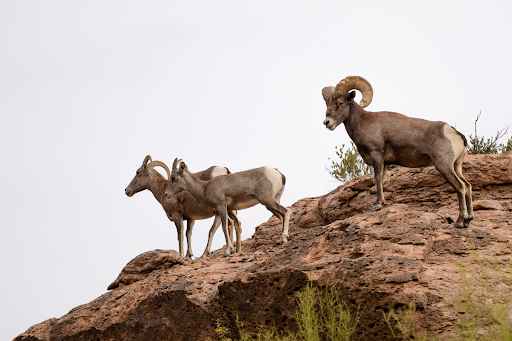

In 1985, Texas rancher C.G. Johnson donated Elephant Mountain Ranch to the State of Texas for the restoration of desert bighorn sheep.
Nearly 40 years later, that gift is still producing conservation results across West Texas.
The 23,147-acre property in Brewster County became Elephant Mountain Wildlife Management Area. Its rugged terrain and protected habitat provided wildlife managers with a place to establish a secure desert bighorn population, conduct research and eventually supply sheep for restoration projects elsewhere.
Building a Source Herd
Desert bighorn sheep once occupied mountain ranges throughout West Texas. By the middle of the 20th century, however, the native population had disappeared from the state. Texas began rebuilding the population through managed breeding, translocations and partnerships involving wildlife agencies, conservation groups, researchers and private landowners.
Elephant Mountain became a critical part of that effort in February 1987, when 10 rams and 10 ewes were released on the property. Additional sheep followed, and the herd grew into one of the state’s most successful desert bighorn populations.
Rather than serving only as a protected population, Elephant Mountain became a source herd. Since 1995, managers have moved approximately 450 sheep from the wildlife management area during nine separate translocation events.
A New Herd in the Franklin Mountains
The latest chapter came in December 2024, when Texas Parks and Wildlife Department personnel and conservation partners relocated 77 desert bighorn sheep from Elephant Mountain to Franklin Mountains State Park near El Paso.
The move established a new herd in a mountain range where desert bighorns had been absent for more than 75 years.
It also addressed an important management need at Elephant Mountain.
The herd there had grown to 212 animals by early December 2024. Moving part of the population reduced pressure on available habitat while creating a second disease-free herd that could support future restoration work.
The Franklin Mountains provide a particularly valuable location because highways and development largely surround the park. Although development creates conservation challenges, it also provides a degree of separation from domestic sheep and nonnative aoudad that can carry pathogens harmful to desert bighorns.
Disease, particularly pneumonia associated with the bacterium Mycoplasma ovipneumoniae, remains one of the greatest threats to bighorn sheep restoration.
A Conservation Gift That Keeps Working
Elephant Mountain demonstrates what a permanent investment in wildlife habitat can accomplish.
C.G. Johnson’s donation did more than protect one piece of West Texas. It created a conservation property capable of producing healthy sheep, supporting scientific research and helping restore desert bighorns across their former range. Elephant Mountain is proof that one landowner’s decision can shape wildlife conservation for generations.