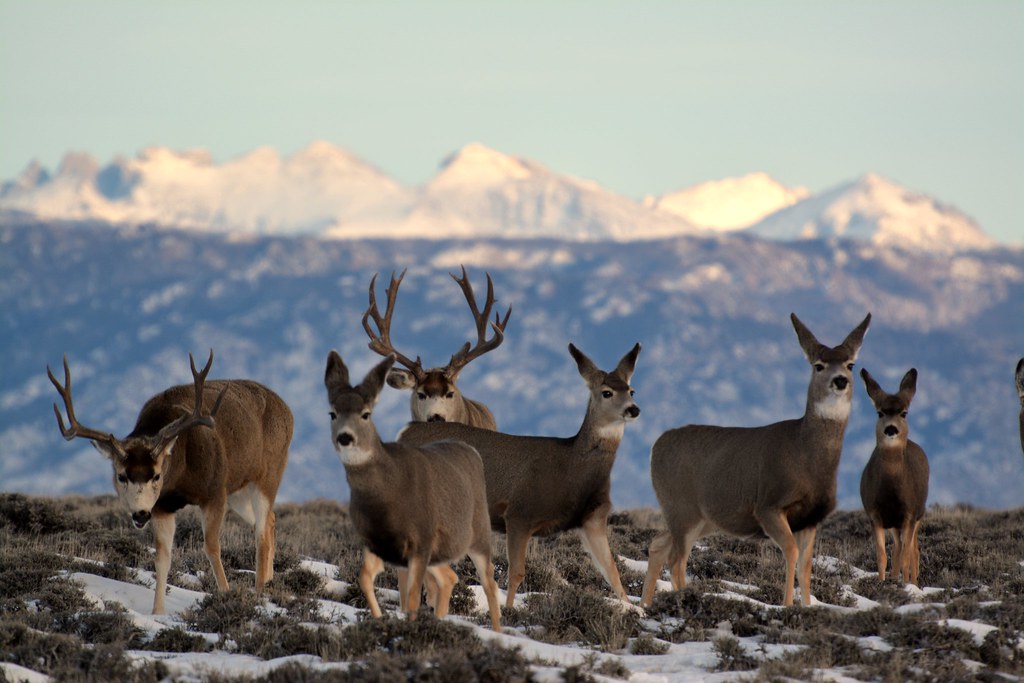

Every year, thousands of mule deer in the American West embark on one of the longest overland migrations of any land mammal in North America. In Wyoming alone, some herds travel up to 150 miles between winter and summer ranges, navigating a maze of mountains, roads, fences, and expanding human development. These migrations are critical to survival – allowing deer to follow the “green wave” of emerging vegetation as snow melts and spring moves up in elevation.
But how do deer know where to go, when to leave, and how fast to travel? A groundbreaking new study from the U.S. Geological Survey and the University of Wyoming shows that these migratory paths aren’t hardwired – they’re taught. In fact, mule deer inherit their routes through maternal learning, with mothers passing detailed knowledge of migration timing and terrain to their offspring. This discovery has significant implications for how we conserve not just wildlife populations, but the culture of migration itself.
What the Study Found
Over ten spring migrations, researchers tracked 72 adult female mule deer using GPS collars. What they discovered was striking: the previous year’s migration route predicted a deer’s path 2 to 28 times more accurately than any environmental factor – like green-up timing, snow depth, or terrain features. In other words, deer rely far more on learned behavior than instinct when deciding how and when to move.
- Some deer began migrating 70 days before spring green-up, others up to 52 days after – a range of over four months.
- Yet almost all arrived at their summer ranges within the same narrow six-day window.
- Early migrants traveled slowly with more rest; late migrants moved quickly with fewer pauses.
This behavioral flexibility confirms that deer use a mental map learned through experience – one typically taught by their mothers during their first year.
Relevant Reading | Mule Deer Conservation: Protecting a Western Icon
Why It Matters
These findings echo patterns seen in other species: translocated bighorn sheep and moose took 40 to 90 years to redevelop migration behaviors after being moved. If a mule deer population is lost, so is the cultural memory of the migration corridor – a loss that can’t be quickly restored.
Conservation isn’t just about protecting space; it’s about protecting knowledge. In this case, knowledge passed from mother to fawn. A corridor is only useful if deer know how to use it.
Takeaway for Conservation
This study makes one thing clear: safeguarding mule deer migration requires more than conserving land – it demands protecting the living memory carried by maternal lineages. Remove too many experienced does, and you risk erasing entire migratory paths. Conservation plans must account for the role of culture in wildlife movement.
In protecting deer, we’re also protecting the traditions they carry – traditions that took generations to build, but could vanish in a single season if we’re not careful.