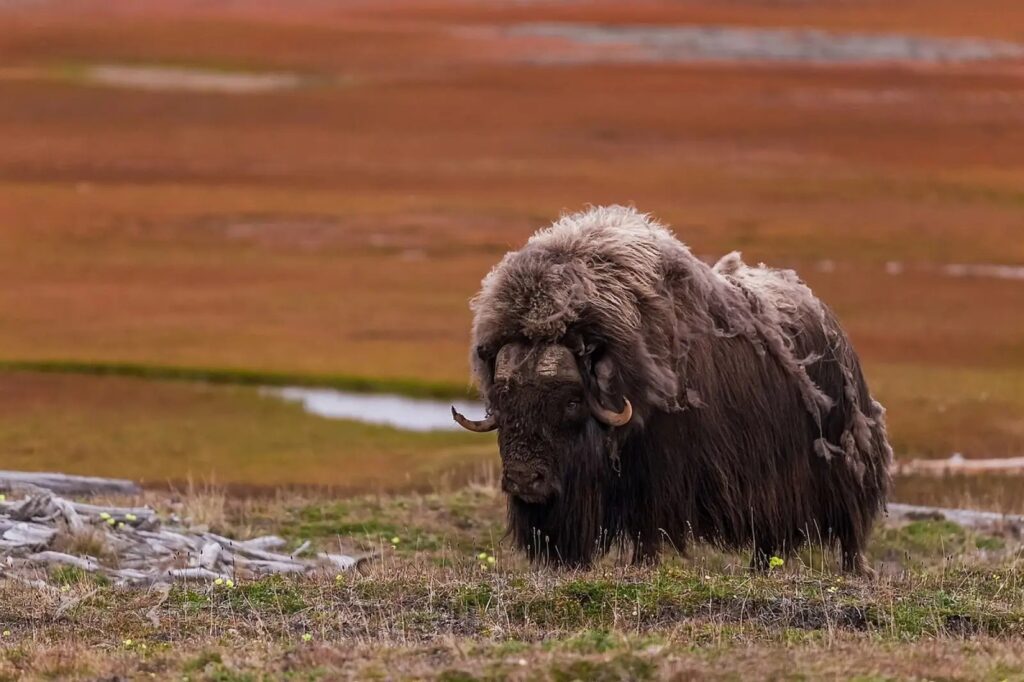

In the remote Canadian Arctic, along the shores of Baker Lake in Nunavut, the landscape is home to two of the North’s most iconic species – the caribou and the musk ox. This region is one of the few inland, freshwater-based Inuit communities, where hunting has long been both a cultural tradition and a means of survival. Today, that tradition plays a surprising and essential role in conservation in Nunavut, linking Indigenous knowledge with scientific efforts to protect Arctic wildlife.
Musk oxen, with their shaggy coats and prehistoric appearance, have roamed the Arctic since the last Ice Age. Although once nearly driven to extinction by the fur trade in the 19th and 20th centuries, their populations have recovered thanks to strict protections and scientific monitoring. Now, in areas where musk oxen populations are stable or increasing, regulated subsistence and sport hunting not only provide food and economic benefit to local communities – they also support vital wildlife research.
Through a collaborative effort between Inuit hunters and researchers, harvested animals are used to collect biological samples. These include blood, tissue, feces, and organs, all of which help track animal health, stress levels, and the presence of disease. Veterinarians like Dr. Susan Cootes have been instrumental in studying musk oxen and rely heavily on these hunter-submitted samples. Without them, the emergence of diseases like brucellosis or bacterial infections such as erysipelothrix might go undetected.
This model of community-based sampling ensures that essential ecological data is gathered without unnecessary killing of animals. Hunters are equipped with sampling kits, and their observations – such as animal body condition or abnormal growths – offer insights that formal surveys might miss.
In one recent case, a harvested musk ox showed signs of disease and infection. Following proper protocols, wildlife authorities were notified, and the carcass was left in place to avoid risk to human health. The collected samples, however, provided researchers with important data for ongoing monitoring.
Relevant Reading | The What and Why of Wildlife Harvesting
Caribou, which migrate in massive herds across the tundra, are equally important to the region. While Indigenous communities have long relied on caribou for food, today, both local and sport hunting are managed through limited quotas to ensure sustainable harvests. Only mature bulls past their breeding age are typically targeted.
The importance of these species is highlighted each year during the Festival of the Lake, where thousands of community members gather to celebrate and share caribou harvested for the event. The festival is a reminder that hunting in Nunavut is not just about subsistence or sport – it is about stewardship, science, and the enduring relationship between people and the land.