
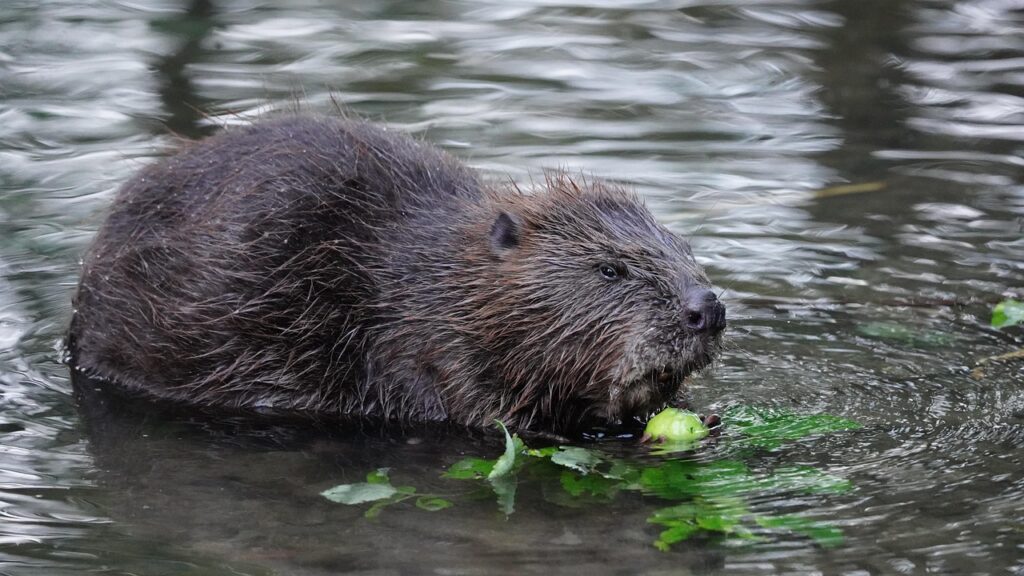

Across the American West, decades of land use – like logging, grazing, and water diversion – have left many streams deeply eroded, disconnected from their floodplains, and struggling to support wildlife. These degraded waterways dry out faster, store less water, and are more vulnerable to drought and climate extremes. With traditional restoration often costly and slow, land managers are turning to a simpler, nature-based solution: mimicking the work of beavers to jumpstart recovery.
In some watersheds, beaver dam analogs (BDAs) have helped raise groundwater tables by over 12 inches, restore streamside vegetation by 33%, and reconnect up to 1,000 feet of channelized stream in just a few years. Behind these modest, mud-and-stick structures lies an ecological solution as smart as it is simple. That’s why the U.S. Fish & Wildlife Service (FWS) and its partners launched the “Leave It to Beaver” initiative – using nature’s engineers to kickstart recovery in some of the West’s most degraded river systems.
Beaver Dam Analogs are low-tech, nature-based structures that mimic the form and function of real beaver dams. Constructed with natural materials like willow stakes, logs, and mud, they’re installed across streams to slow water flow, raise water levels, and capture sediment. Over time, these structures help reconnect rivers with their floodplains, stabilize deeply incised channels, and promote the regrowth of riparian vegetation – especially willows and sedges that thrive in moist soils.
One of the initiative’s greatest strengths is its emphasis on partnership. FWS is collaborating with universities, nonprofits, tribal groups, landowners, and government agencies to get BDAs in the ground. For example, Gonzaga University is studying how BDAs in Eastern Washington creeks are reducing sediment and phosphorus loads – early results show up to 30% less sediment downstream in treated areas. By combining local knowledge with scientific monitoring, the project can tailor BDA designs to each watershed and refine techniques over time.
Why use Beaver Dam Analogs? In many damaged watersheds, reintroduced beavers alone can’t restore stream complexity fast enough. These human-installed structures act as ecological scaffolding, giving streams a head start in healing. Once habitat improves, beavers are more likely to return – and when they do, they take over maintenance duties and even expand the structures themselves.
The benefits of BDAs are wide-ranging and measurable:
- Hydrology: By slowing water, BDAs recharge groundwater, expand wetlands, and help reconnect streams to their floodplains – supporting perennial flow even in dry seasons.
- Sediment Retention: BDAs trap fine sediment and nutrients like phosphorus, improving water clarity and reducing downstream pollution.
- Biodiversity: Slower pools and restored floodplains create vital habitat for fish, amphibians, birds, and pollinators. In some areas, native trout have shown 30–50% increases in spawning success near BDAs.
- Climate Resilience: BDAs increase water storage and delay runoff, buffering against drought and flood extremes – critical services in an era of climate change.
The payoff is more than ecological. BDAs are low-cost, built from locally sourced materials, and easy to install with hand tools and teamwork. With support growing across the West – from Montana to Washington – communities and conservation groups are embracing these tools as a cost-effective way to restore river health.
What’s Ahead?
FWS and its partners are scaling up: expanding monitoring, refining BDA designs, and training crews across the region. As of 2023, over 100 BDA sites have been installed, with more on the way. The results are already visible: more stable streambanks, clearer water, and beavers moving in to take over the work.
In a time when expensive, engineered solutions often dominate restoration planning, BDAs offer a refreshing alternative: let nature lead. Small structures, big impact – and a lesson we’re relearning from the species that figured it out first.