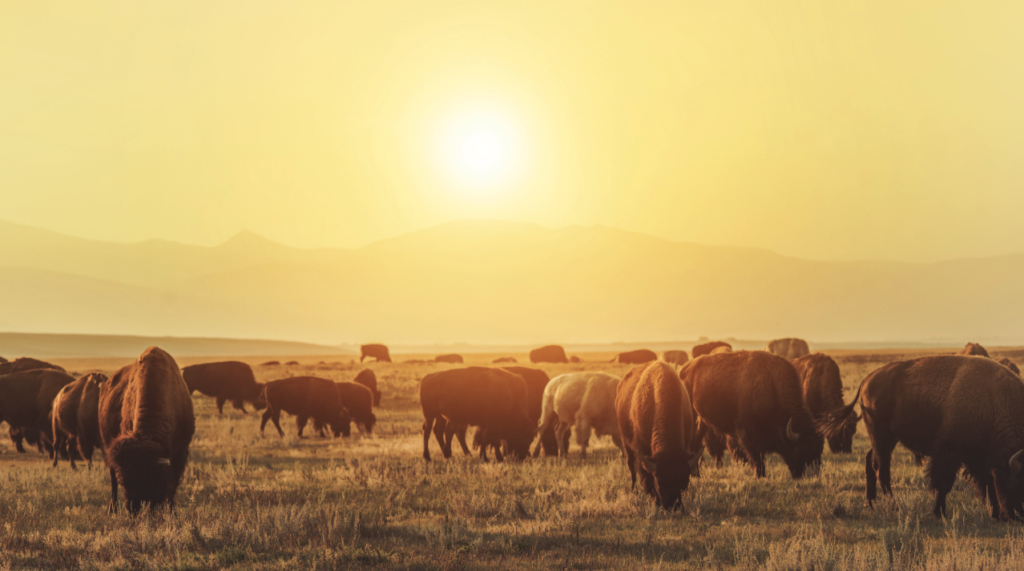

For the first time in more than two centuries, American bison are once again moving across prairie in Kane County, Illinois. Earlier this winter, a small herd was released onto restored grassland at Burlington Prairie Forest Preserve, marking the return of a species that once played a central role in shaping the region’s ecosystems.
The reintroduction reflects a growing effort to restore ecological function to Midwestern prairies that were largely converted to agriculture and development. Bison historically influenced grassland systems through grazing, movement, and soil disturbance, creating habitat conditions that supported diverse plant and animal communities. Their absence left prairies without one of their most important ecological drivers.
This project was developed through a partnership between the Kane County Forest Preserve District and the American Indian Center of Chicago. The collaboration reflects a shared goal of restoring both ecological processes and cultural connections tied to the landscape. For Indigenous partners, the return of bison represents the renewal of a long-standing relationship between people, animals, and land rather than a symbolic gesture.
The herd is being introduced gradually under close management. Animals are initially acclimated within fenced areas while land managers monitor health, behavior, and habitat conditions. The preserve has undergone extensive prairie restoration, including native plant reestablishment and invasive species control, to ensure the landscape can support large grazers over time.
Prairie ecosystems once covered vast portions of Illinois, but today they remain among the most fragmented and rare habitat types in the state. Restoring functional grasslands requires more than planting native species. It also depends on reintroducing processes such as grazing that shape vegetation structure, nutrient cycling, and wildlife habitat.
Bison serve as a keystone grassland species. Their grazing patterns create variation in plant height and composition, which supports insects, birds, and small mammals. Wallows formed by bison collect water and provide habitat for amphibians and invertebrates. These processes help maintain ecological diversity across prairie landscapes.
Public interest in bison has grown in recent years, but conservation practitioners emphasize that visibility is only one part of the story. Successful restoration depends on long-term planning, land availability, monitoring, and collaboration across institutions. The Kane County project reflects this approach by prioritizing habitat readiness and management capacity before reintroduction.
Community engagement is also part of the project’s design. Educational opportunities tied to the herd are planned to help residents understand prairie ecosystems, the role of large grazers, and the history of bison in the region. These efforts aim to connect people with local conservation work rather than treating restoration as a distant or abstract concept.
Conservation Takeaway
The return of bison to Kane County prairie shows how careful planning, habitat restoration, and partnership can reintroduce species lost from the landscape for generations. By focusing on ecological function and long-term stewardship, bison are once again contributing to healthy prairie systems rather than existing only as symbols of the past.