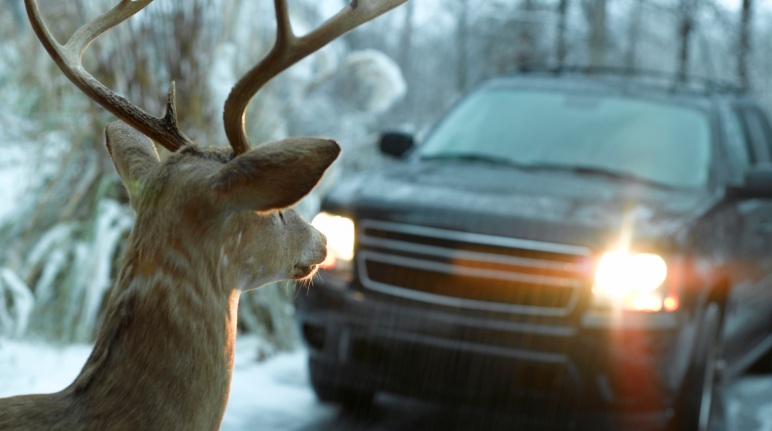

You are driving home at dusk. A deer steps into the road. Brakes slam. The moment feels sudden and unpredictable.
Wildlife vehicle collisions are not evenly scattered across the map. They cluster in specific regions, on certain road types, and during seasonal peaks. In North America, deer-vehicle collisions rise sharply from October through December and usually peak in November.
The Data
According to the Insurance Insurance Institute for Highway Safety, deer vehicle crashes peak in the fall, especially from October through December. That spike coincides with breeding season, when deer move more and cross roads more frequently. While breeding season is a major driver of increased deer movement, it is not the only factor behind fall collision spikes. Shorter daylight hours align peak deer activity with commuter traffic. Younger deer disperse into new territories. Agricultural harvest alters movement corridors. Cooler temperatures increase overall activity.
Population density also plays a role. White-tailed deer populations in the United States. In many suburban and fragmented landscapes, deer densities exceed historical norms, particularly where hunting access is limited or herd management is inconsistent. Higher deer densities increase the likelihood of road crossings simply because more animals occupy the same human-dominated spaces.
Roads Shape the Risk
Roads divide landscapes. Highways cut through forests, wetlands, and grasslands that animals still depend on for food, water, cover, and mates. When a road fragments habitat, animals do not stop moving. They attempt to cross.
A recent study published in Scientific Reports examined how roads divide landscapes into smaller roadless patches. When researchers mapped how far road impacts extend into surrounding habitat, they found that areas appearing continuous on a map are actually broken into thousands of smaller pieces. Smaller patches mean animals must cross roads more often to reach food, mates, or territory.
Add in dawn and dusk activity patterns, migration routes, and traffic speed, and the pattern sharpens. Certain stretches of road consistently experience higher wildlife vehicle collision rates because the landscape funnels movement into those crossings.
The Takeaway
Wildlife vehicle collisions aren’t just random accidents. They happen because roads cut through the paths animals naturally use to move around, and those roads divide the landscapes where animals live.