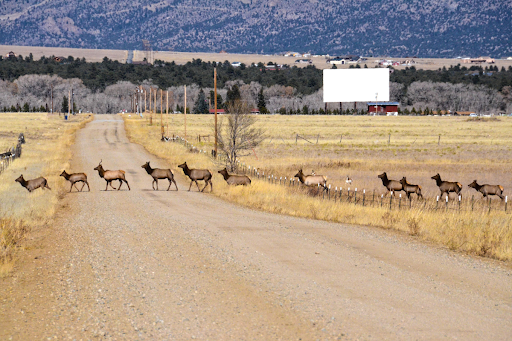

Western big game animals have always survived tough conditions. But across the American West, drought is becoming more intense, lasting longer, and changing the landscape faster than many species can adapt.
For elk, mule deer, pronghorn, and other wildlife, drought affects far more than water availability. It changes migration patterns, reduces food quality, increases stress, and can even impact reproduction and survival rates.
Researchers are now studying how these animals respond when the land they depend on begins to dry out.
Using GPS collars, tracking technology, and habitat monitoring, scientists are gaining a clearer picture of what prolonged drought actually does to wildlife. In many areas, animals are being forced to travel farther for food and water while dealing with hotter temperatures and poorer habitat conditions.
That extra stress matters.
When drought reduces healthy vegetation, animals burn more energy searching for resources. Calves and fawns may struggle to survive. Herd health can decline. At the same time, wildfire risk increases, shrinking already limited habitat even further.
And drought rarely happens in isolation.
Across the West, wildlife is also navigating habitat fragmentation, expanding development, road systems, fencing, and growing pressure on migration corridors. Drought intensifies all of it.
That’s why conservation efforts are shifting toward resilience-focused management rather than simply protecting acreage. Land managers and conservation groups are increasingly prioritizing water access, habitat restoration, wildfire recovery, and migration corridor protection to help wildlife adapt to changing conditions.
Technology is also changing how conservation works on the ground.
Advanced tracking systems and biological monitoring tools now allow researchers to better understand animal movement, stress levels, feeding behavior, and seasonal habitat use in real time. That information helps shape smarter management decisions that can improve long-term herd health and habitat quality.
The challenge ahead is significant, but so is the opportunity.
Healthy wildlife populations depend on healthy landscapes. Protecting water sources, maintaining connected habitat, and restoring resilient ecosystems will play a major role in the future of conservation across the West.
Big game animals are remarkably adaptable; however, as drought becomes a defining feature of the western landscape, conservation strategies will need to evolve just as quickly as the environment itself.