
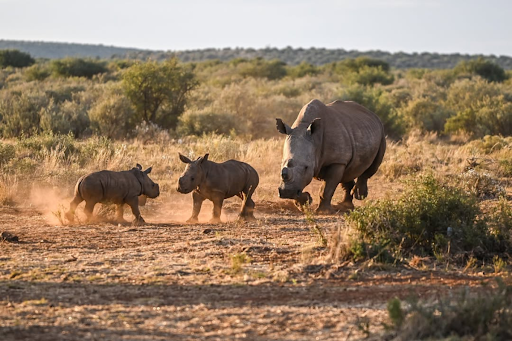

For decades, anti-poaching efforts across southern Africa have relied heavily on armed patrols, aerial surveillance, canine units, checkpoints, and increasingly sophisticated security infrastructure. Yet rhino poaching remains one of the continent’s most persistent conservation crises, with hundreds of rhinos still killed annually despite massive investments in enforcement and wildlife protection efforts.
Now, a large-scale study out of South Africa is forcing conservationists to confront an uncomfortable reality: one of the most effective anti-poaching tools may simply be removing the horn itself.
Researchers studying 11 reserves within the Greater Kruger ecosystem found that rhino dehorning reduced poaching by roughly 78% between 2017 and 2023. More than 2,200 rhinos were dehorned during the study period, with researchers concluding the practice produced significantly greater measurable results than many traditional anti-poaching strategies. The findings matter in 2026 because they represent one of the first large-scale, peer-reviewed studies to produce measurable evidence that dehorning may outperform many of the expensive anti-poaching systems conservation groups and governments have relied on for decades.
The logic is brutally simple. Remove the horn, remove much of the financial incentive.
Rhino horn continues to command enormous prices on illegal Asian markets, fueling sophisticated criminal trafficking networks across Asia where demand remains tied to black market status symbols and traditional medicine markets. These organized syndicates continue targeting both black and white rhinos across southern Africa, exploiting vast landscapes, limited enforcement resources, and deeply established international trafficking pipelines that have challenged even heavily guarded reserves.
Dehorning changes the equation.
The process itself is controlled and highly regulated. Veterinarians sedate the rhino, blindfold the animal to reduce stress, and use specialized cutting tools to remove most of the horn while leaving the growth plate intact. Rhino horn is made primarily of keratin, the same material found in human fingernails and hair, despite decades of misinformation fueling international black market demand. The horn eventually regrows, meaning many rhinos must undergo the process again every 18 to 24 months.
For many conservationists, however, the debate extends beyond effectiveness.
Rhino horns are used for defense, territorial behavior, dominance interactions, and maternal protection of calves. Critics argue the practice fundamentally alters the animal conservationists are trying to protect. Others question whether long-term behavioral consequences are fully understood.
The study also revealed another uncomfortable truth within modern conservation. Traditional anti-poaching infrastructure is extraordinarily expensive. Helicopters, tactical response teams, surveillance technology, ranger deployments, and intelligence operations consume massive budgets with mixed results. By comparison, dehorning accounted for only a small fraction of total anti-poaching spending while producing the most measurable reduction in poaching pressure.
Conservation Takeaway
Conservation isn’t always simple. Sometimes wildlife managers must make tough decisions that give animals the best chance to survive, even if those choices aren’t what people expect.