
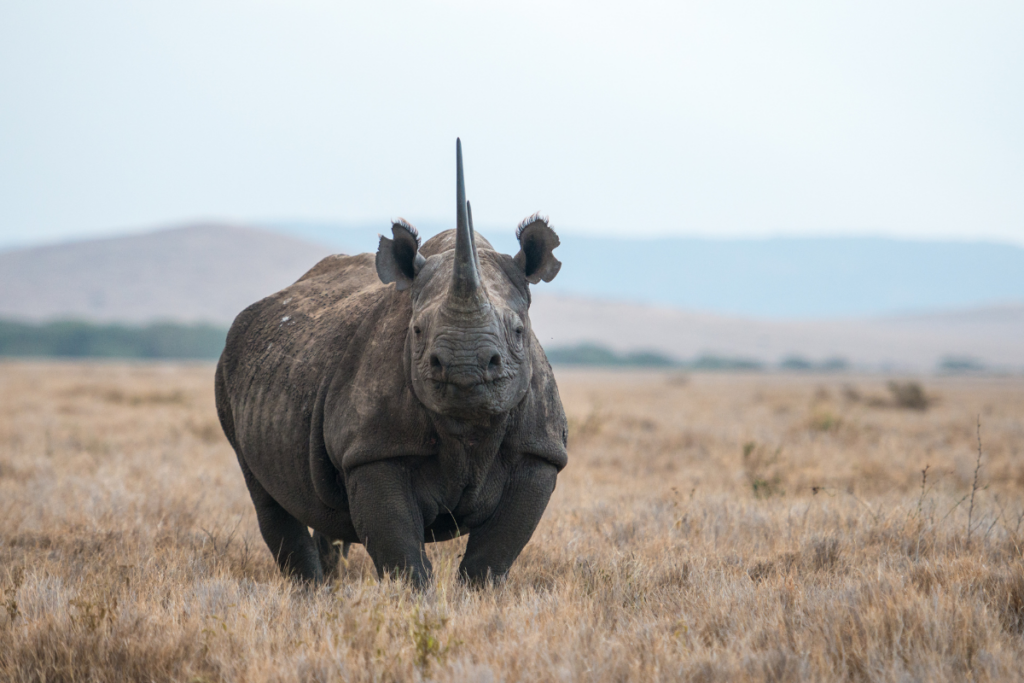

After disappearing from Mozambique in the 1970s, black rhinos are once again establishing a healthy population in the country.
In June 2025, 10 critically endangered black rhinos—five males and five females—were moved from South Africa to Zinave National Park in Mozambique. They joined black rhinos returned to the park through earlier reintroductions, expanding the breeding population and improving its chances of remaining genetically diverse and viable over the long term.
South Africa has stabilized important rhino populations through wildlife management, anti-poaching work and protected habitat. That success has allowed the country to help restore rhinos elsewhere in their historic African range.
What Happened to the Black Rhino?
Black rhinos once numbered approximately 65,000 across Africa in the early 70s. Between 1970 and 1993, poaching caused the population to collapse by 96%, leaving only about 2,300 animals in the wild.
Mozambique’s rhinos faced another devastating force: a 16-year civil war that caused park management and wildlife protection to collapse. Zinave National Park lost most of its large animals, and rhinos disappeared from the landscape for more than four decades.
Since 1996, stronger anti-poaching programs, protected habitat and strategic translocations have helped Africa’s black rhino population slowly recover. Approximately 6,788 remain in the wild today, but the species is still classified as critically endangered.
Preparing Rhinos for a 36-Hour Truck Journey
Before the move, the rhinos were held in specially prepared facilities at Hluhluwe-iMfolozi Park. Each rhino was then secured inside an individual wildlife transport crate and loaded onto a specialized truck.
The rhinos traveled entirely by road from South Africa to Zinave National Park in Mozambique. The journey took approximately 36 hours by truck, including stops to check the animals and provide food and water. The operation required experienced capture crews, veterinarians, secure vehicles and close coordination between both national governments.
The Conservation Frontlines Takeaway
Zinave’s rhinos are the product of a decade of groundwork, not a single truck convoy. Since Mozambique’s National Administration for Conservation Areas and the Peace Parks Foundation signed a co-management agreement in 2015, more than 2,540 animals from 16 species have been reintroduced to the park — rebuilding the wildlife community, ranger capacity and security that a rhino population depends on.